
Data Collection

Data collection is the process of collecting and storing high amounts of data from any system. The data results from the calculations by sensors, machines and experiments. They can be weather data, environmental parameters, images etc.

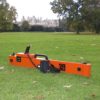
EM 38 MK2 Soil Conductivity Sensor [Professional]

Introduction The EM38-MK2 provides measurement of both the quad-phase (conductivity) and in-phase (magnetic susceptibility) components within two distinct depth ranges, all simultaneously, without any requirement for soil-to-instrument contact. With a maximum effective depth of exploration of 1.5 m, applications in agriculture, archaeology and general soil sciences are common. The standard EM38-MK2 includes two receiver coils,… read more »
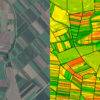
Multi-temporal mapping of the vegetation fraction in early-season wheat fields using images from UAV [Farmer]

Paper Introduction Mapping vegetation in crop fields is an important step in remote sensing applications for precision agriculture. Traditional aerial platforms such as planes and satellites are not suitable for these applications due to their low spatial and temporal resolutions. So, an UAV equipped with a commercial camera (visible spectrum) was used for ultra-high resolution… read more »

Multi-temporal mapping of the vegetation fraction in early-season wheat fields using images from UAV [Professional]

Paper Introduction Mapping vegetation in crop fields is an important step in remote sensing applications for precision agriculture. Traditional aerial platforms such as planes and satellites are not suitable for these applications due to their low spatial and temporal resolutions. So, an UAV equipped with a commercial camera (visible spectrum) was used for ultra-high resolution… read more »

Canopy Vegetation Indices from In situ Hyperspectral Data to Assess Plant Water Status of Winter Wheat under Powdery Mildew Stress [Farmer]

Paper Introduction Plant disease and pests influence the physiological state and restricts the healthy growth of crops. Physiological measurements are considered the most accurate way of assessing plant health status. Specifically, in this paper the use of an in situ hyperspectral remote sensor to detect plant water status in winter wheat infected with powdery mildew… read more »

Canopy Vegetation Indices from In situ Hyperspectral Data to Assess Plant Water Status of Winter Wheat under Powdery Mildew Stress [Student]

Paper Introduction Plant disease and pests influence the physiological state and restricts the healthy growth of crops. Physiological measurements are considered the most accurate way of assessing plant health status. In this paper, we researched the use of an in situ hyperspectral remote sensor to detect plant water status in winter wheat infected with powdery… read more »

Canopy Vegetation Indices from In situ Hyperspectral Data to Assess Plant Water Status of Winter Wheat under Powdery Mildew Stress [Professional]

Paper Introduction Plant disease and pests influence the physiological state and restricts the healthy growth of crops. Physiological measurements are considered the most accurate way of assessing plant health status. In this paper, we researched the use of an in situ hyperspectral remote sensor to detect plant water status in winter wheat infected with powdery… read more »

Spectral-temporal characterization of wheat cultivars through NDVI obtained by terrestrial sensors [Farmer]

Paper Introduction Remote sensing technique has emerged as an effective tool for systematic survey, analysis, and better management of natural resources (land, soil, water, forests, mountains) along with the monitoring of desertification, flood, drought, and landform change. It provides a vast scope to explore, identify, and analyse the natural resources of undeveloped regions. It documents… read more »

Spectral-temporal characterization of wheat cultivars through NDVI obtained by terrestrial sensors [Professional]

Paper Introduction Remote sensing applications in agriculture are presented as a very promising reality, but research is still needed for the correct use of spectral data. A study was done to evaluate the spectral-temporal patterns of eleven wheat cultivars (Triticum aestivum L.). With the help of the GreenSeeker and FieldSpec 4 terrestrial sensors, spectral signatures… read more »

Sidebar