Soil Electrical Conductivity Sensors [Farmer]
Introduction
Accurate soil water content measurements are critical for estimation of energy and water balances, as well as for understanding chemical and biological processes in vadose zone, plant root zones and in groundwater.[1] Soil electrical conductivity is an indirect measurement that correlates very well with several soil physical and chemical properties. Electrical conductivity is the ability of a material to transmit an electrical current and it is commonly expressed in units of mS/m (milli-Siemens per meter).
It is an important parameter because it correlates very strongly with particle size and soil texture.[2]
The agricultural uses for soil ECa
- Delineation of management zones (variable rate seeding, nutrients, herbicides, irrigation)
- Directed soil sampling and other on-farm tests
- Interpretation of yield maps
- Fine-tuning soil maps
- Salinity diagnosis
- Drainage remediation planning[3]
Smart Farming Technology Products
There are two types of ECa Sensors:
- Contact: they use electrodes and measures voltage, Veris (Veris Technologies, Inc., Salina, Kansas USA)
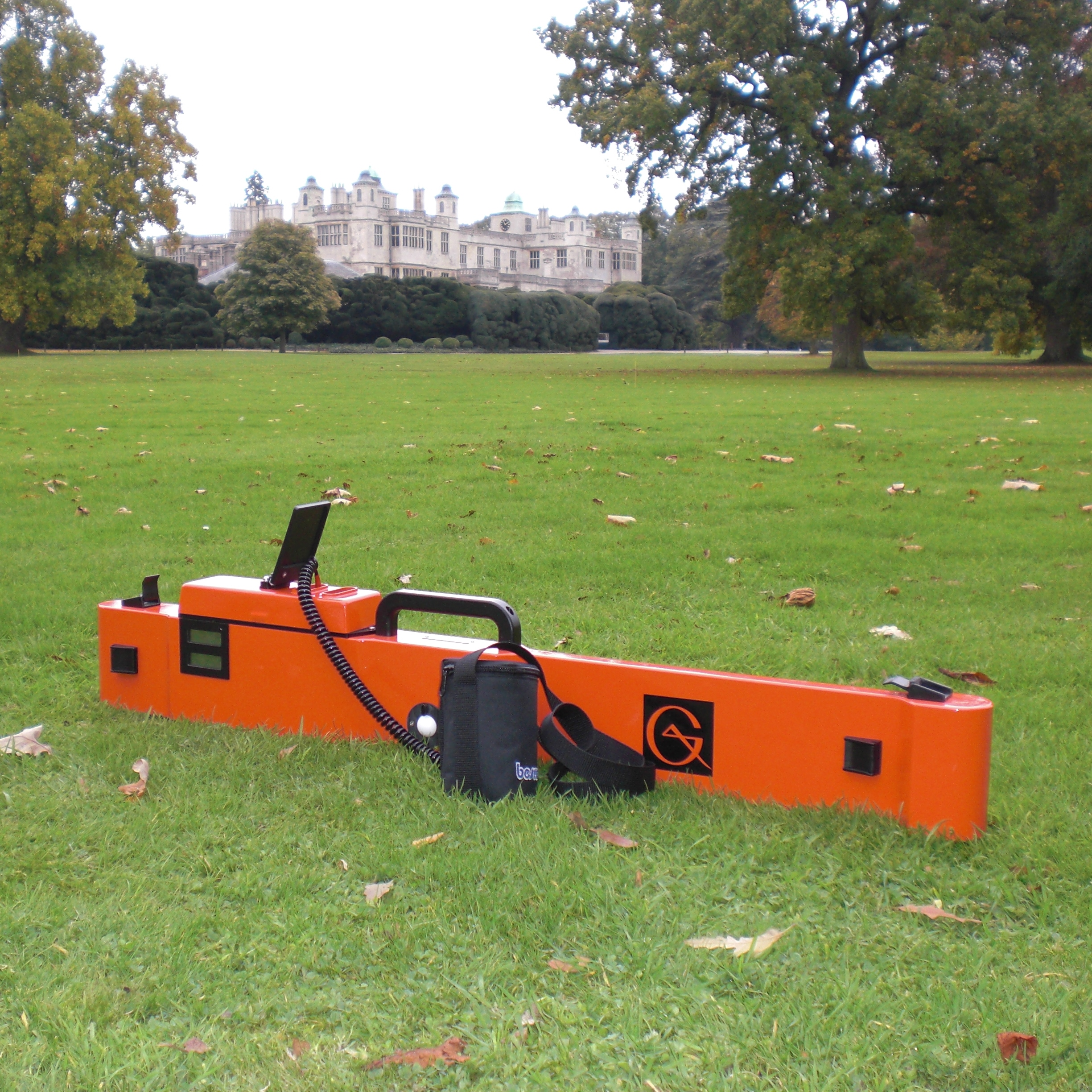
- Non-Contact: sits up or above the soil surface and measures electromagnetic inductance, EM38 (Geonics Ltd., Mississauga, Ontario, Canada)
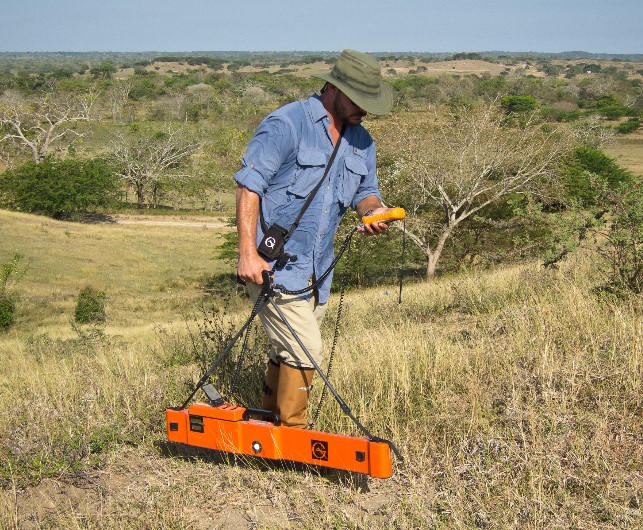 | 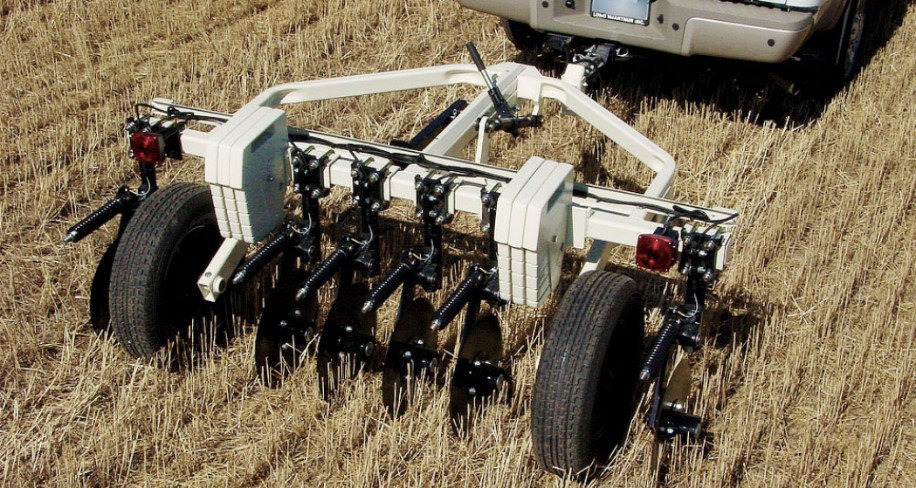 |
Figure 1: Electrical Conductivity EM38 Sensor.[4] | Figure 2: Electrical Conductivity Veris Sensor.[5] |
It is really important, to have soil electrical conductivity measurements, because it helps to understand the soil texture and type. Soil texture relates to factors that have a major impact on productivity and will affect management strategies. For example irrigation scheduling is closely related to soil type and water holding capacity of the soil, mobile nutrients used, lost and stored differently as soil texture varies.[6] The use of EC measurement systems is nowadays of great importance for irrigation, crop and fertilizer management in a framework of precision agriculture (PA).
Veris sensor: | EM38 sensor: |
References
[1] Kizito F., et al., (2007), Frequency, electrical conductivity and temperature analysis of a low-cost capacitance soil moisture sensor, Journal of Hydrology 352, 367-378
[2] Grisso B. R., et al., (2009), Precision Farming Tools: Soil Electrical Conductivity, Virginia Cooperative Extension, publication 442-508
[3] agric.gov.ab.ca/$Department/deptdocs.nsf/all/crop14324/$FILE/au-2013-woods-effectiveness-of-em38-and-veris-soil-ec-technologies.pdf
[4] geoviewinc.com/case-studies/archaeological-studies/pre-colombian-artifacts
[5] veristech.com/the-sensors/v3100
[6] Wietrak P., Khalilian A., /Mueller J., Henderson W., (2009), Applications of Soil Electrical Conductivity in Production Agriculture, Better Crops, Vol. 93 No.2
Feature Image Source: https://www.geomatrix.co.uk/cms/resources/product-thumbs/em38mk2.jpg