
Agricultural Machinery: Advancements and State of the Art [Student]
Related Smart Farming Technology Products
1.TED: Electric straddling robot for winemakers
TED is a highly precise weeding tool for vineyards. Its main asset is that it frees the hands and minds of wine growers so that they can spend more time on tasks with a higher value-add.
TED is also an excellent alternative to chemical weedkillers, which are generally part of traditional wine growing practices. In addition, the robot’s weight has been kept to a minimum (900 kg) to avoid compacting the soil. When used frequently, it allows to regularly maintain the vineyard.
The TED robot provides high precision weed control while helping you save time throughout the season.[1]
Find out more about TED:
The following video, shows the TED vineyard robot in action:
TED takes care of weeding your vine rows, all by itself. It lowers the strenuousness and strain of weeding to optimize working conditions.
TED helps you lower variable costs. The robot is entirely electric, which greatly reduces energy and maintenance costs. The fact that it weeds mechanically allows you to save on the purchase of chemical weedkill products.
The TED robot weeds your wine crops all by itself without any assistance. It frees your hands and those of your team as well your mind so that you can concentrate your energy on more value-add tasks for your wine farm.
TED is an environmentally-friendly robot that works the soil mechanically thanks to a range of specialized tools. As it is 100% electric, it allows to reduce the use of herbicides while limiting the emission of greenhouse gas and particles
TED allows you to schedule weeding interventions when they suit you best. The robot is entirely autonomous and allows you to program a weeding session for a different plot while it’s already weeding another plot. TED also helps you intervene longer when climate is subject to changes and can return to work sooner after a rainy episode.
Thanks to its electric design, TED helps you reduce the time you spend on maintaining your viticultural equipment.[1]
2. H3O Sprayer
The “Futur H3O” equipment is a hydro pneumatic sprayer for fruit crop phytosanitary treatments. In a three years study with the Valencian Institute of Agriculture Research (IVIA http://www.ivia.gva.es/) we verified that in fruit crop protection there are losses produced by phytosanitary product discharged into the environment, which in many cases exceed 50% of volume of the phytosanitary product applied. This “drift” is caused by different factors, such as the sprayers’ default factory set up for large trees, generating the same air quantity and without regulation option.
Thanks to the H3O technology incorporated by the Futur sprayer we can seamlessly adapt the spray to the tree size. H3O technology is a new automatic regulation and proactive work system that allows reducing the drift, the dose of product applied, reducing fuel consumption and improving agro-food safety, environmental sustainability and profitability for growers. The H3O system operates through an app for mobile device with Wi-Fi connection to the sprayer.
Calibration:
Intelligent calibration system based on the vegetable mass:
- Reduction of fuel consumption by up to 5l / h.
- Reduction of real drift by 47.6% and potential by 45.9%.[2]
Find out more:
3. HORSCH Contour Farming
HORSCH Contour Farming is the automatic adjustment of the dosing frequency when cornering over the machine working width.

The standard built-in radar sensor sits in the middle of the machine. The two additional radar sensors are mounted on the opposite wing ends of the seeder and pick up the speed there. If the machine is turning, the inboard radar sensor registers a slower speed and the outside radius a higher speed. If the deviation is greater than 0.6 km / h with respect to each other, each individual in-line engine of the metering devices is automatically supplied with a value corrected by the speed change on the basis of a stored control curve. The machine then lays down less seed compared to the time unit in the rows inside the curve and more seeds in the outer area of the curve. This keeps the sowing rate per hectare, over the entire working width of the machine, constant. The process runs automatically and enables the yield potential of the respective plant to be optimally exploited. [3]


The future machines think actively and HORSCH Intelligence makes it possible. With intelligent software and electronic solutions HORSCH seed drills work even more efficiently and help you to save both money and increase confidence.
HORSCH seed drill are always equipped with the ISOBUS standard. This does not only mean that every HORSCH machine can be controlled with any ISOBUS terminal. Additionally, SectionControl, VariableRate as well as the TaskController for data processing is a standard equipment for every HORSCH seed drill.
4. Machine Sync: Grain harvest with optimized machinery
- Increase efficiency by showing multiple machines in the field at the same time.
- Share coverage map and guidance lines for increased efficiency and complete field coverage when two machines are working in the same field.
- Automates unloading on-the-go in order to reduce machine-to-machine interactions and allow operators to focus on operation.
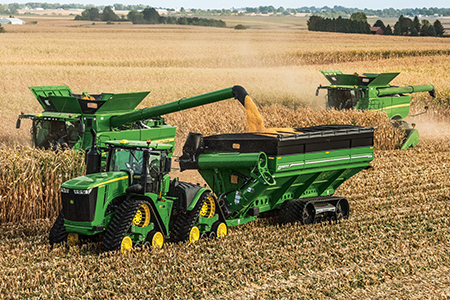
Machine Sync works with In-Field Data Sharing to show the location of all combines and tractors within the fleet of Gen 4 machines harvesting in the field. Knowing the exact location of multiple combines as well as their grain tank fill level and unloading auger status allows the grain cart operators to be in the right place at the right time.
On the go unloading

Operators will see the following information for each combine in a network with an active JDLink Connect subscription and In-Field Data Sharing functionality:
- Combine location and direction of travel
- Grain cart location
- Combine grain tank fill level
- Combine unloading auger status
- Combine operators, once connected with a tractor/grain cart, control the tractor’s speed and can nudge the tractor forward, backward, or laterally to maximize the filling of the grain cart.
Operation
Machine Sync guides an approaching grain cart tractor to a predetermined “Home” position for unloading. This is a unique home point for that specific grain cart tractor/combine. Individual home points allow combines, tractors, and grain carts to have different configurations (duals, cart sizes, unloading auger lengths).
When running with Gen 4 Machine Sync, keep in mind these basic principles:
- Results are better with straight track than curve track.
- When not straight tracking, slower speeds provide better results than faster speeds.
- Results are better with gentle curves than tight turn radius curves.
- Articulated tractors exhibit the above performance variations more significantly than other platforms.

Increase efficiency with harvest logistics
Enable faster decisions for a more efficient harvest by seeing the location of all machines in a field and combine grain tank levels. Knowing combine grain tank fill levels and location helps grain cart operators decide which combine to unload first. Minimizing waiting for a grain cart, reduces the amount of idle time each combine accumulates during the season. Combines, grain carts, and semis can plan and perform at maximum efficiency with Machine Sync.[4]

Find out more:
5. Ecorobotix Autonomous Robot Weeder
Autonomous Robot Weeder offers the following key points:
Autonomy: Is 100% autonomy. Solar traction without recharging. Works up to 12 hours a day without a human operator.
Detection > 85%
Solar powered
Easy to control
High precision spraying. No crops affected, no loss of yield.
Easy maintenance
Lightweight
Non-hazardous
90% less herbicide used. Reduce your costs and your environmental impact.
Up to 30% less expensive than standard treatments
Improved yield: no herbicide left on the crops
Conserves the organic life of the soil, with limited soil compaction.

The robot works without being controlled by a human operator. It covers the ground just by getting its bearings and positioning itself with the help of its camera, GPS RTK and sensors. Its system of vision enables it to follow crop rows, and to detect the presence and position of weeds in and between the rows. Two robotic arms then apply a microdose of herbicide, systematically targeting the weeds that have been detected.
Reliance on solar power makes the robot completely autonomous in terms of energy, even when the weather is overcast. As it adapts its speed to the concentration of weeds, it is most suitable for use in fields where the level of concentration is low to moderate, in order to cover the ground at a reasonable speed. We recommend using the machine after an initial standard application of herbicide, in order to replace subsequent applications and thus save an important amount of herbicide. The machine can be completely controlled and configured by means of a Smartphone app.[5]
Find out more about Autonomous Robot Weeder:
6. Electrostatic Sprayers
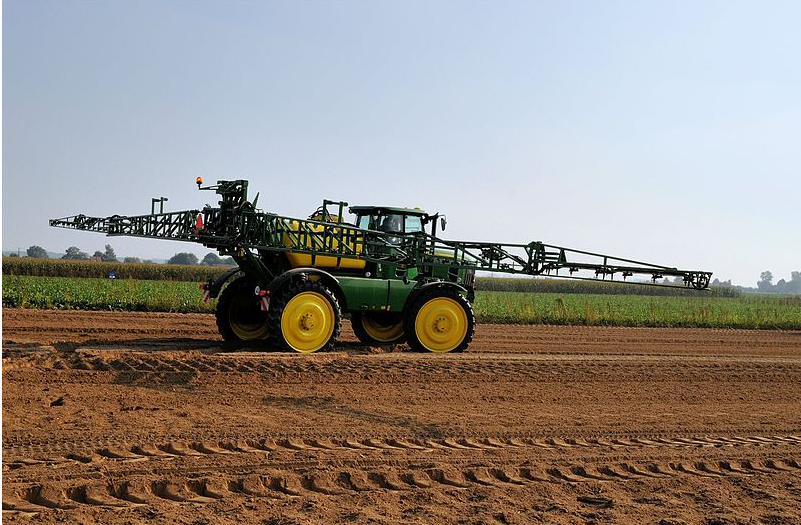
Electrostatic nozzles have been tested in agriculture since the late 1970’s. Predominantly used in aerial applications, they are sometimes employed on air blast sprayers in orchard and berry operations and on horizontal booms in vegetable crops. Spray is charged by a high voltage supercharger. Commonly, the charge is induced by an electrode positioned close to the atomizing spray plume as droplets begin to form. An intense electric field imparts a positive or negative charge depending on the polarity of the DC power used.[6]
The way that the electrostatic spray works is the following:
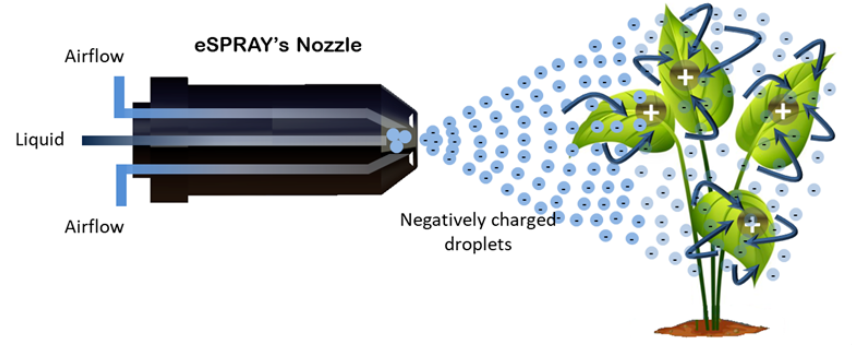
The electrostatic force could act as a driving force for disintegration of liquid and produces uniform fine droplets. The finer charged droplets are transported toward the plant by following the electrostatic field lines even to the backside of leaves. On this way over-spraying and drifting are avoided. To achieve better control of insects, many entomological studies have shown that, smaller droplets are more efficient.[6]
According to the above and also to other studies the need for an accurate spraying system and the reduction of drifting, even more sprayers are using the electrostatic sprayer technology. Many studies have shown, that this system has a great efficiency. For example, a row-crop machine should be capable of treating at least 80 ha (200 acres)’of crop per workday.[10] The increased sales or the reduced expense, would have to compensate at least for the added investment in the electrostatic system over a relatively short 8 to 10 years period-the estimated life of such a machine operating in a harsh environment with corrosive toxic liquids. Simultaneous measurements of charge- and mass transfer in numerous experiments both with idealized-model targets and with biological targets have indicated that up to a 50 percent reduction in the electrostatic deposition benefit is attributable to the presence of target points.
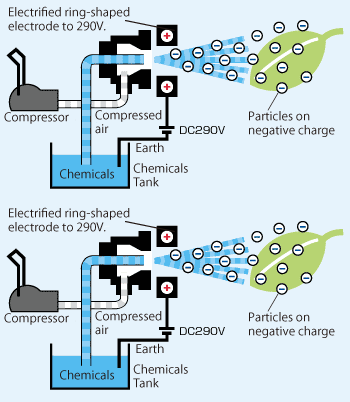
- Increased spraying efficiency (improved front and back surface deposition)
- Reduced drifting
- Environmental benefits
- Cost-savings benefits[14]
Brian Wallingford of Mesa Vineyard Management in Templeton, California agreed. “We noticed the reduction in water use almost immediately,” he said: “We went from applying over 100 gallons per acre down to only 30. With that type of decrease in water, along with chemicals, means the machine will pay for itself in two years. As an example: a 100-acre vineyard using roughly 100 gallons of solution with a conventional sprayer uses 10,000 gallons of water. Marty Hedlund, at 12.5 gallons per acre, would use only 1,250 gallons. Using electrostatic spraying, the application efficiency can be increased up to 80%.[9]
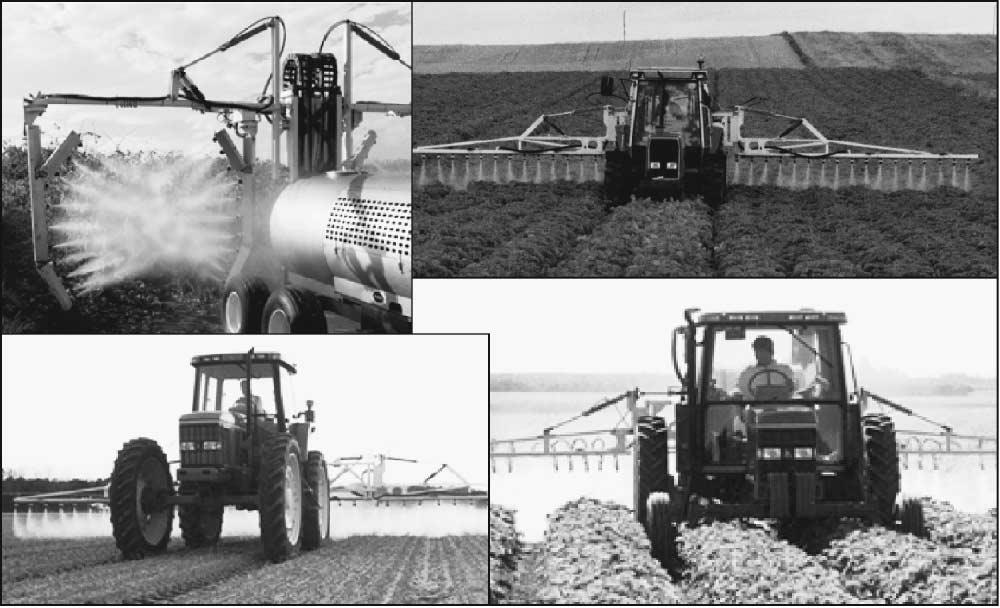
For greenhouse applications there are two types of sprayers available: hydraulic and low-volume. There are many variations of these that fit particular crops or growing methods. In the hydraulic sprayer, a pump supplies energy that carries material to the plant. Water is the carrier and the pump creates the pressure at 40-1000 psi. Spray material is usually applied to “wet” or “drip”. Nozzles on the boom or handheld gun break the spray into small droplets and direct it to the foliage. On the other hand, in a low-volume (LV) sprayer, spray material in a water or oil carrier is injected into a high-speed air stream developed by a fan, blower or compressor. In most LV sprayers, a small pump is used to inject a concentrate pesticide solution into the air stream. The speed of the air stream may be as high as 200 mph. To get sufficient coverage, the air within the foliage canopy must be replaced with air that contains the pesticide. As the droplet size is much smaller, good coverage can be achieved with less chemical.[15]
In terms of the costs, Manley (1982) reported that insect control costs could be reduced by up to $50/ha (around 45€) using the electrostatic sprayer compared to conventional systems.[16] Also fuel consumption of the electrostatic sprayer is lower than that of other spray types (Wheel Barrow, Side Pump) and more specifically it was 0.016 lt/tree.[17] Other studies have shown, that the usage of the electrostatic sprayer can increase the application efficiency by about 80%.[18]
| What is electrostatic spray (adv): | Example of the use on grapes cultivation: |
Electrostatic sprayer manufacturers: http://www.agriexpo.online/agricultural-manufacturer/electrostatic-sprayer-5951.html
Electrostatic sprayer user’s manual: http://maxcharge.com/z_temp/OM%20&%20PI%20-%20Tractor%20Mounted/MANUALS/ENGLISH/350VA32_MANUAL_WEB.pdf
Related Projects
1.TEKNOAX 2.0
The TEKNOAX 2.0 project aims at answering to agriculture increasing demand for intelligent components in the market of axles for farming trailers, going beyond the state of the art and filling the existent gap with precision farming needs.
TEKNOAX 2.0 will bring intelligence onto axles, enabling unique traceability and condition based maintenance through a collaborative platform. Agriculture is indeed facing a big transformation favored by technological innovations introducing in the near future a new paradigm, precision farming, enabled by a new generation of intelligent machines and equipments.

The innovative axles developed by ADR and characterized by enhanced overall mechanical proprieties will be equipped with a communication system connected to a collaborative platform, both developed by RINA Consulting, to track axles performances and keep track of maintenance onto each unit. Furthermore, the manufacturing process will be optimized in order to favor the mass production of the new generation of axles and their launching in the market in the near future after the end of the project.

In a first testing phase, COLAERT will provide implementation on trailer and testing on-road and on-field. Then, intelligent axles will be validated by FARMTECH in relevant working conditions on their trailers, which will be equipped with intelligent axles and tested by a pool of farmers throughout Europe, in order to develop the system in direct contact with end-users. A potential Business Plan has been already established, and the first results are going to be presented to public in next international fairs for agricultural machineries.
Axles will be ready for commercialisation within 30 months from project start. New axles will also enable new business models, as trailer renting and trailer sharing.
In a nutshell, the overall objectives of the project are the following:
- Development of the new generation of axles having enhanced mechanical proprieties as well as optimization of the manufacturing process
- Bringing intelligence into axles and enabling their sensing capabilities
- Validating the new generation of axles in relevant operational conditions
- Development of user-friendly features for the ICT web based collaborative platform
- Validating innovative business models based on TEKNOAX 2.0[19][20]
Learn more:
Related Scientific Articles
1.Towards machine vision based site-specific weed management in cereals
Arable weeds are generally distributed in patches, while herbicides are applied uniformly. Herbicides can be saved if only the patches are sprayed, i.e. patch spraying (PS). Bottlenecks for cost-effective PS are weed monitoring technology and valid technology-based decision rules for PS (thresholds).
The novel machine vision algorithm Weedcer has been developed as an efficient weed monitoring tool for PS. Weedcer estimates the proportions of young weed leaves and cereal leaves in high resolution red–green–blue images. We conducted field trials to test relative weed cover (RWC) and relative mayweed cover (RMC) estimated by Weedcer as decision rules for PS. RWC is the total weed cover divided by the total plant cover and RMC is the mayweed cover divided by the total plant cover. The main criterion for evaluation and basis of these thresholds was the measured grain yield. Images (about 0.06-m2) were acquired with a GPS guided autonomous field robot in spring, the normal time for spraying seed-propagated broadleaf weeds in both winter – and spring cereals in Norway.
Three map-based trials (weed monitoring and spraying in two separate operations) showed that mean RWC per management unit (12.0 × 12.5-m) was generally adequate. In winter wheat heavily infested with scentless mayweed (Tripleurospermum inodorum (L.) Sch.Bip.) and/or scented mayweed (Matricaria recutita L.), the mean RMC per management unit was more adequate. Progress during the project allowed three additional trials conducted in real-time (weed monitoring and spraying in the same operation). These were conducted with the robot in spring cereals, and showed that a weighted moving average of RWC per image was adequate.
The sprayed and unsprayed management units in these trials were minimum 3.0 × 3.0-m and 0.5 × 3.0-m, respectively. Results indicated that the Weedcer-based thresholds should be lower in wheat (Triticum aestivum) than in barley (Hordeum vulgare). [21]


2. HydraROPS
An inadequate use of the deployable Roll Over Protective Structure (ROPS) in agricultural tractors contributes to fatalities in rollover events. To help to resolve this problem, an automatically deployable ROPS was designed, constructed and tested. The prototype, called HydraROPS, established two assistance levels for the elevation of the foldable ROPS. In the first level, the driver decides to change the ROPS’ position and this change is made using the manual activation on the board. In the second level, an automatic change to the operative position occurs in situations of impending rollover, without the intervention of the driver. In this level, it automatically sends a phone message with the GPS location to contact emergency response personnel. The tractor’s hydraulic power was used to move the protective structure. In order to increase the deployment speed of ROPS, a pressure accumulator was included in the hydraulic circuit. The deployment time of the ROPS without the pressure accumulator was 2.599 s and with the pressure accumulator 0.743 s. The results of the research show that the pressure accumulator assembled in the hydraulic circuit reduced the deployment time of ROPS by 71%; and that the electronic control system can correctly predict overturn. HydraROPS has the advantage compared to other automatic deployment devices of protective structures that can be installed on tractors equipped with a certified rollover protective structure. The installation in marketable tractor models does not modify the protection structure; therefore a new certification of the protection structure is not necessary.[22]


3.Robot for weed species plant-specific management
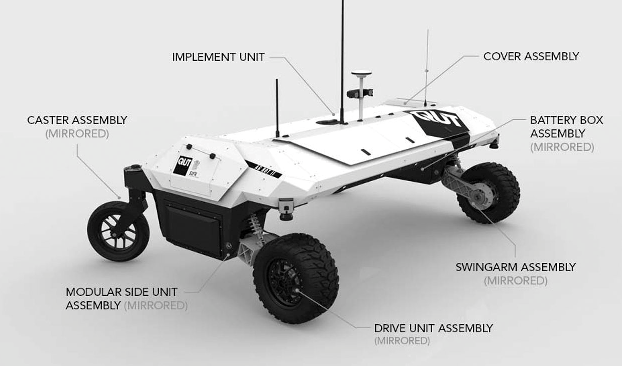
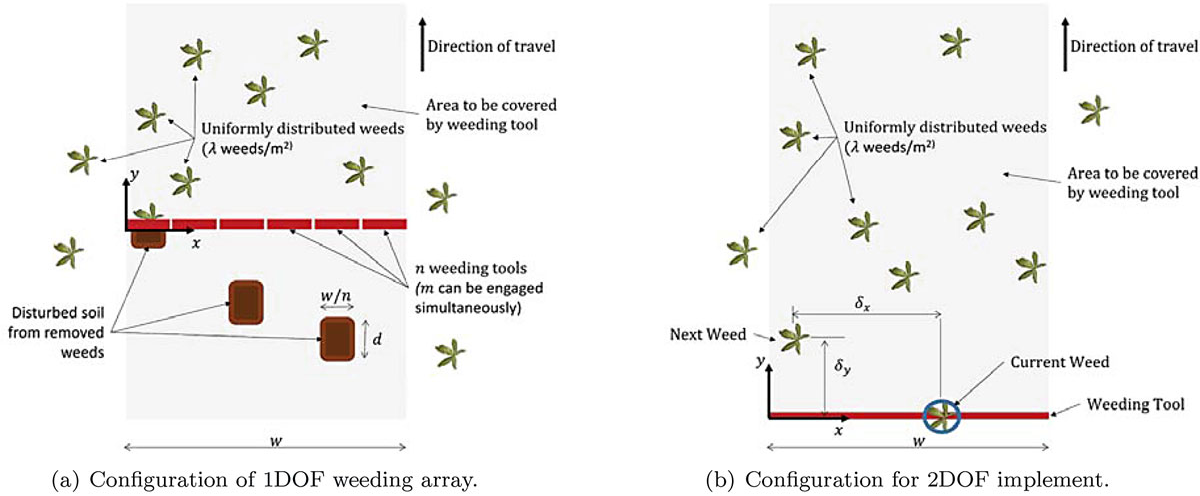
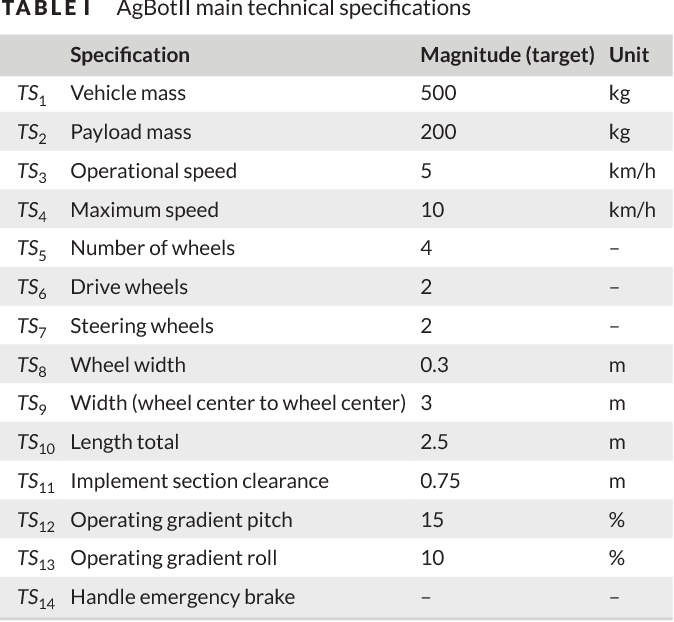
The rapid evolution of herbicide-resistant weed species has revitalized research in nonchemical methods for weed destruction. Robots with vision-based capabilities for online weed detection and classification are a key enabling factor for the specialized treatment of individual weed species. This paper describes the design, development, and testing of a modular robotic platform with a heterogeneous weeding array for agriculture. Starting from requirements derived from farmer insights, technical specifications are put forward. A design of a robotic platform is conducted based on the required technical specifications, and a prototype is manufactured and tested. The second part of the paper focuses on the weeding mechanism attached to the robotic platform. This includes aspects of vision for weed detection and classification, as well as the design of a weeding array that combines chemical and mechanical methods for weed destruction. Field trials of the weed detection and classification system show an accuracy of 92.3% across a range of weed species, while the heterogeneous weed management system is able to selectively apply a mechanical or chemical control method based on the species of weed. Together, the robotic platform and weeding array demonstrate the potential for robotic plant-species–specific weed management enabled by the vision-based online detection and classification algorithms. [23]
References
[1] naio-technologies.com/en/agricultural-equipment/vineyard-weeding-robot
[2]fedepulverizadores.com/portfolio/futur-h3o-smart-air-pro
[3] agroanimalshow.german-pavilion.com/en/news-innovations/38502
[4] deere.com/en/technology-products/precision-ag-technology/guidance/machine-sync
[5] ecorobotix.com/en/autonomous-robot-weeder
[6] sprayers101.com/electrostatic
[8] Asano K. (1999), Electrostatic Pesticide Spraying, The Modern Problems of Electrostatics with Application in Environment Protection, pages 363-377.
[9] D.R.Jadhav, V.S. Majali, A. I. Sawant (2015), Analysis of optical density of electrostatic spray on apple in winter and summer season, IJIERT, ISSN: 2394-3696, VOLUME 2, ISSUE 11.
[10] Law, S.E. (1983), Electrostatic Pesticide Spraying: Concepts and Practice, IEEE Transactions on industry applications, VOL. IA-19, NO. 2 160-168.
[11] arimitsu.co.jp/english/technology/classroom05
[12] flickr.com/photos/94293372@N00/3989940644
[13] Sasaki, Robson Shigueaki, Teixeira, Mauri Martins, Fernandes, Haroldo Carlos, Monteiro, Paulo Marcos de Barros, Rodrigues, Denílson Eduardo, & Alvarenga, Cleyton Batista de (2013), Parameters of electrostatic spraying and its influence on the application efficiency. Revista Ceres, 60(4), 474-479.
[14] maxcharge.com
[15] ag.umass.edu/greenhouse-floriculture/fact-sheets/sprayers-spray-application-techniques
[16] Herzog G.A. et al. (1983), Evaluation of an Electrostatic Spray Application System for Control of Insect Pests in Cotton, J. Econ. Entomology 76: 637-640.
[17] Malekabadi A.J. (2016), Comparing Quality of a Telescopic Boom Sprayer with Conventional Orchard Sprayers in Iran, Journal of Agricultural Science Technology, VOL. 18: 585-599.
[18] Subhagan S.R et. al. (2016), Comparative Evaluation of Electrostatic Sprayer with Powered Mist Blower, International Journal of Engineering Research and Development, VOL. 12, Issue 8 04-11.
[19] mondomacchina.it/en/teknoax-smart-trailers-project-c2253
[20] cordis.europa.eu/project/rcn/207482/reporting
[21] T.W. Berge, S. Goldberg, K. Kaspersen, J. Netland (2012), Towards machine vision based site-specific weed management in cereals, Computers and Electronics in Agriculture, Volume 81, Pages 79-86, ISSN 0168-1699.
[22] D. Ojados Gonzalez, B. Martin-Gorriz, I. Ibarra Berrocal, B. Miguel Hernandez, F. Caro Garcia, P. Morales Sanchez (2016), Development of an automatically deployable roll over protective structure for agricultural tractors based on hydraulic power: Prototype and first tests, Computers and Electronics in Agriculture, Volume 124, Pages 46-54, ISSN 0168-1699.
[23]Bawden, Owen et al. (2017), Robot for weed species plant-specific management, J. Field Robotics 34: 1179-1199.