
Variable Rate Sprayers [Farmer]
Introduction
To achieve a more precise, ecological and economical pesticide application process, it is important to focus on crop parameters and field variability instead solely on disease occurrence. In fields with different soil quality, crops and water availability the amount of spray needed varies as well. For example, areas with a reduced cop growth need a lower amount of spray liquid to cover the crop surface, a locally adapted variable-rate spraying strategy in these areas will reduce the amount of fungicidal liquids that reach the ground and would be left unused.[1]
Variable Rate systems can be used on sprayers and run either by real-time sensing system or from pre-prepared prescription maps. In both cases the principle is to adjust application rates based on soil sampling results or agrochemical inputs based on crop qualities, such as vegetation maps. What is required is a GNSS receiver and a VR controller.[2]
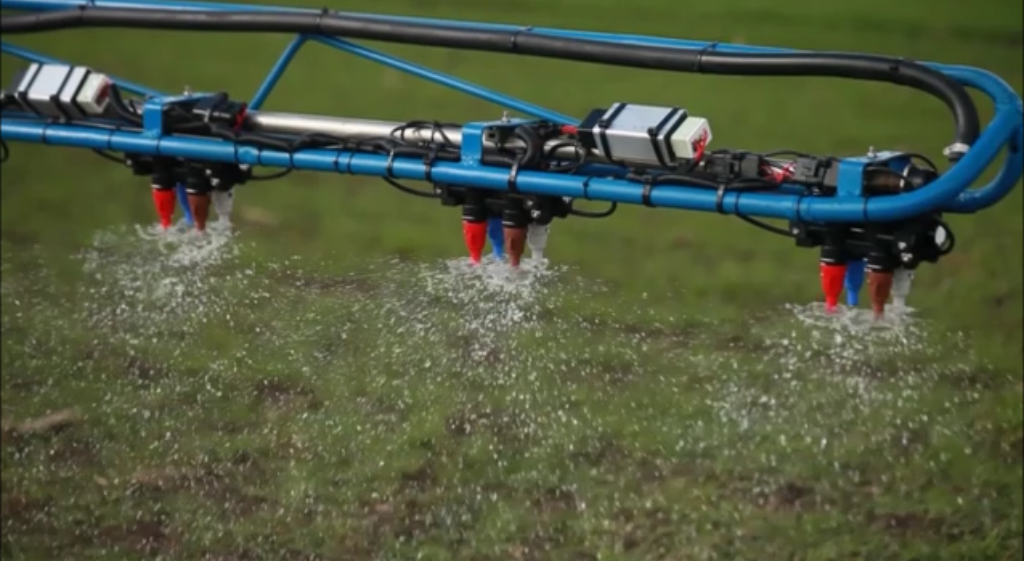
In Real-time detection Variable Rate sprayers, sensors automatically sense weeds and activate specific nozzles only when necessary. For map-based weed control VRA systems, some form of “task computer” is required to provide a signal indicating the target rate for the current location. Also a system for physically changing the application rate to match the current prescribed rate is required.
Related Smart Farming Technology Products
Altek Individual Nozzle Control[3]
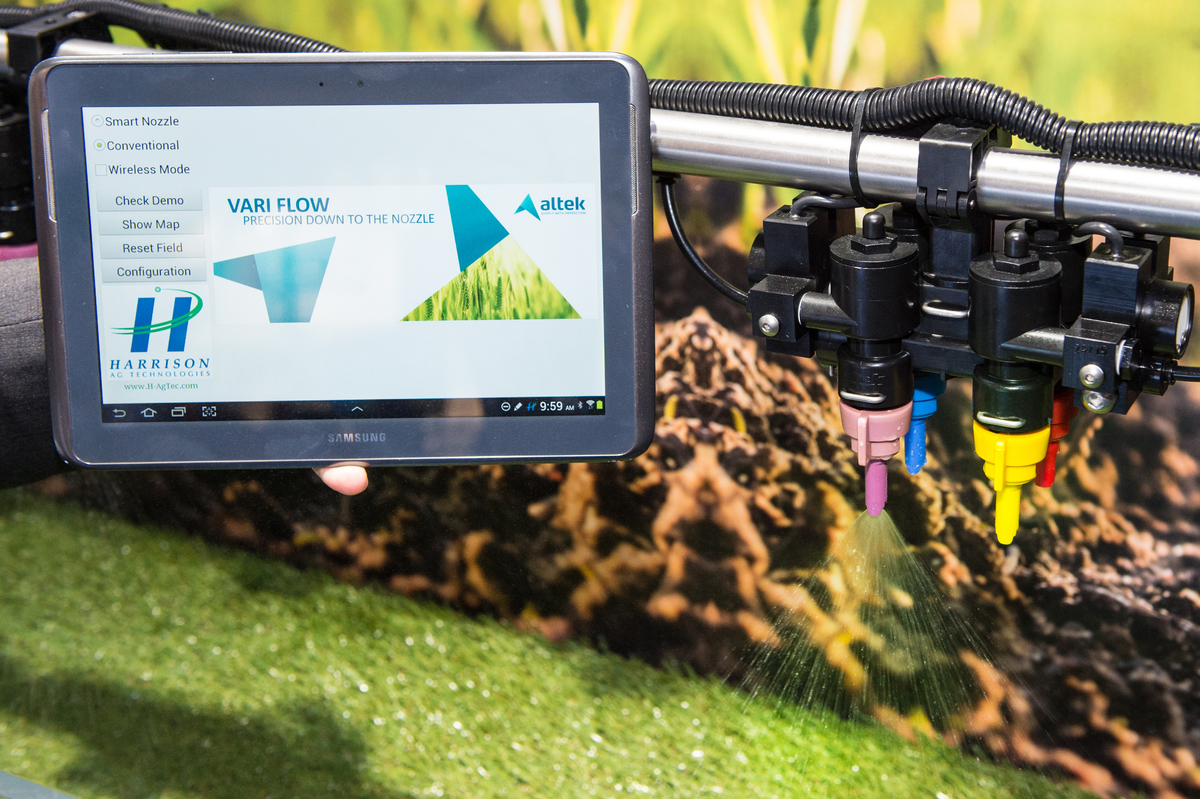
Using GPS technology, altek’s Smart Nozzle system allows the individual and independent control of each nozzle on the spray line, effectively making each nozzle a section. The Smart Nozzle technology gives growers retro fit access to high grade precision in crop protection.
Related Scientific Papers
Precision variable rate spray is one of the research hotspots in the field of modern agriculture spraying applications research due to how heavy are the environmental imapcts of herbicides and fungicides. Variable rate spraying allows growers to apply adjusted volume rate of pesticides to the target and saves more than 50-75% of pesticides, improves the utilization rate (over 55%), control efficiency and significantly reduce environmental pollution caused by the pesticide application.[2]
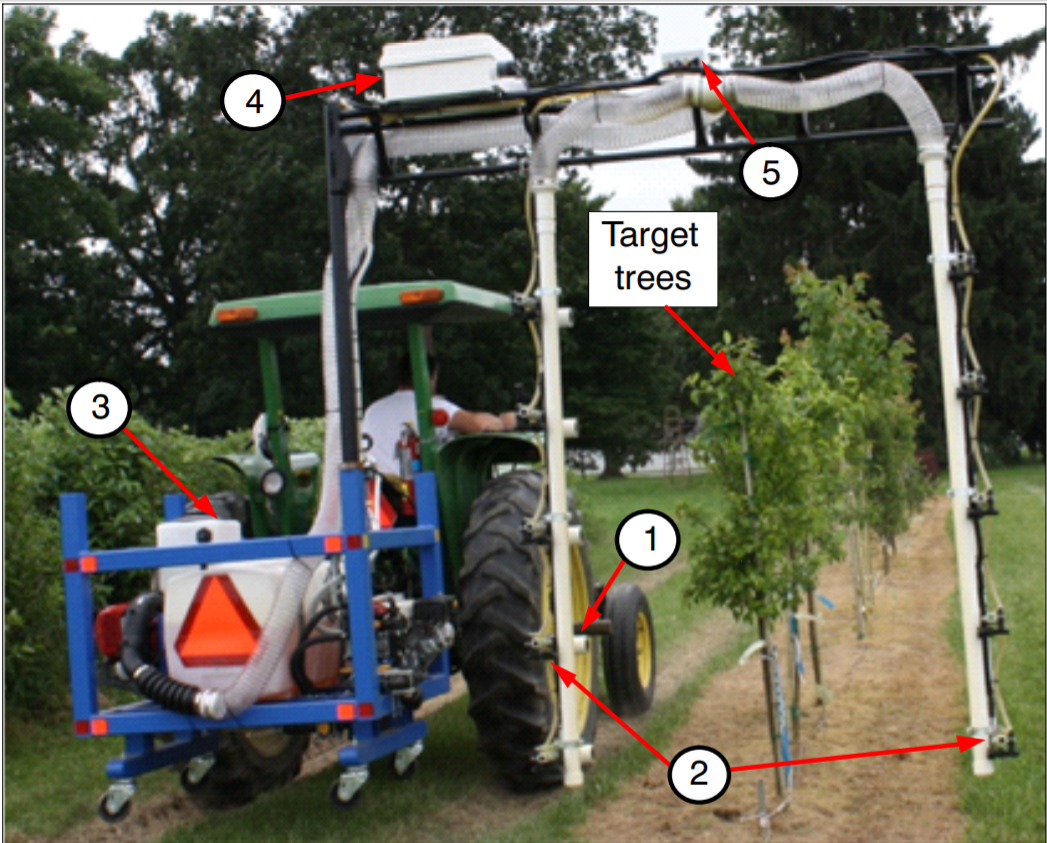
Performance Evaluation of a newly developed Variable-Rate Sprayer for nursery liner applications[4]
In this paper, Jeon et al. performed spray tests in olive, apple, and pear orchards showed that the sprayer reduced chemical use by 28% to 72% compared to a conventional sprayer.
References
[1] Tackenberg M., Volkmar, C., Schirrmann, M., Giebel, A., Dainmer, H.K. (2018) Impact of sensor-controlled variable-rate fungicide application on yield, senescence and disease occurrence in winter wheat fields. Pest Manag Sci. 74(6):1251-1258. doi: 10.1002/ps.4843
[2] Z., Zhang, X., Wang, Q., Lai and Z., Zhang (2018). Review of Variable-Rate Sprayer Applications Based on Real- Time Sensor Technologies, Automation in Agriculture – Securing Food Supplies for Future Generations, Stephan Hussmann, IntechOpen, DOI: 10.5772/intechopen.73622.
[4] Jeon H. Y., Zhu H., Derksen R.C., Ozkan H.E., Krause C.R., Fox R.D., (2011), Performance Evaluation of a newly developed Variable-Rate Sprayer for nursery liner applications, American society of Agricultural and Biological Engineers ISSN 2151-0032, Vol.54(6): 1997-2007