
Weather Stations with Sensors [Student]
Introduction
Climate smart agriculture is one of the techniques that maximizes agricultural outputs, through proper management of inputs based on climatological conditions. Real time weather monitoring system is an important tool to monitor the climatic conditions of a farm, because many of the farms related problems can be solved by better understanding of the surrounding weather conditions.[1]
Weather stations are really important because, many of the traditional sources of weather information are not sufficient for agricultural applications because of the long distances between weather stations. Also, they are not always timely, which can make the data inaccurate or irrelevant.
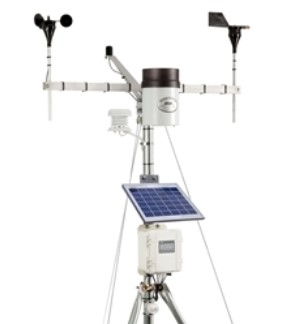
- Amount and type of cloud cover
- Rainfall and snow
- Maximum, minimum and dew point temperatures
- Relative humidity
- Wind speed and direction
- Extreme events, such as heatwaves and cold waves, fog, frost, hail, thunderstorms, wind squalls and gales, low-pressure areas, different intensities of depressions, cyclones, and tornadoes
Advantages of using weather stations in agriculture are:
- Accurate measurement of current weather conditions for a particular location and surroundings
- Possibility to view historical data and make long-term statistical analyses and also graphs data up to 10 years back, including calculations of minimum and maximum values
- No additional costs or fees associated with operating the station or publishing data on the internet
- Accurate disease and pest modelling from local and live data
- Effective timing of pest and weed control with real‐time weather information and accurate forecast information
- More effective and timely soil fertility applications by monitoring weather and soil moisture conditions
- Assess conditions for seeding
- Efficient irrigation operations through improved soil moisture monitoring and irrigation scheduling
- Avoidance of significant loss of income and production due to extreme weather conditions.[3]
Weather forecasts for agriculture are an essential requirement parameter for farmers so they can forecast the effect of hazardous weather phenomena, pests and diseases. Dissemination of weather forecasts to agricultural users should be quick, with the minimum possible time lag following their formulation. Pre-season forecasts must have a validity period of at least 10 days and not less than a week.
An Automated Weather Station (AWS) is equipped with the following:
- Communication link: AWSs report observations by a variety of formats, including telephone lines, radio modems, mobile phone networks and satellite networks
- Software: A powerful a simple software, which is used to support direct communications (not remote) between datalogger and the PC
- Sensors: Relative humidity and temperature sensor, wind direction and speed, rain gauge and pyranometer sensor, ambient and surface temperature, atmospheric pressure, soil moisture, fruit diameter, trunk diameter, leaf wetness
Weather data has many applications. Accurately scheduling irrigation and/or cold protection, for example, is very difficult, if not impossible, without reliable weather data. Proper maintenance of a weather station is imperative and will ensure the station is collecting data that is useful across many applications.[4]
Station Parts and Components
Soil Moisture sensor
Surface soil moisture is the water that is upper 10 cm of soil, whereas root zone soil moisture is the water that is available for plants, which is generally considered to be in the upper 200 cm of soil.[5] Soil moisture sensors measure the volumetric water content indirectly by using some other property of the soil, such as electrical resistance, dielectric constant, or interaction with neutrons, as a proxy for the moisture content. Soil moisture (Θ) is usually defined as the water present in the unsaturated part of the soil profile, i.e., between the soil surface and the ground water level and can be expressed in different units (e.g Fredlund and Rahardjo, 1993; Hillel 1998, Robock et al., 2000; Sneviratne et al., 2010).
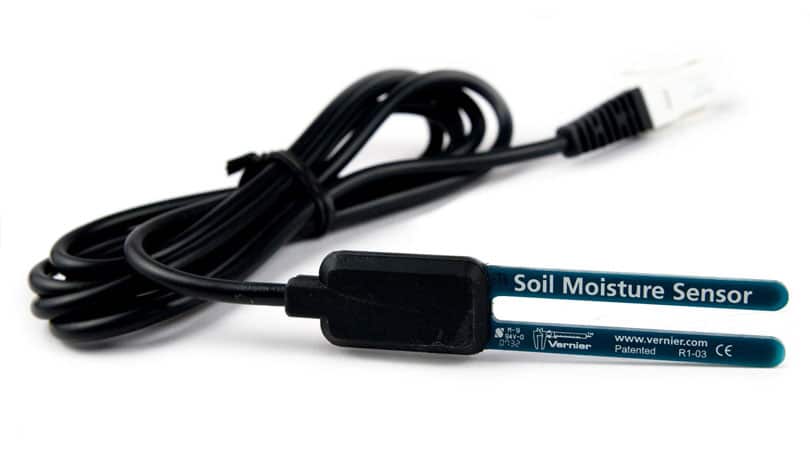
- Irrigation and sprinkler systems
- Moisture monitoring of bulk foods
- Rain and weather monitoring
- Environmental monitoring
- Water conservation applications[7]
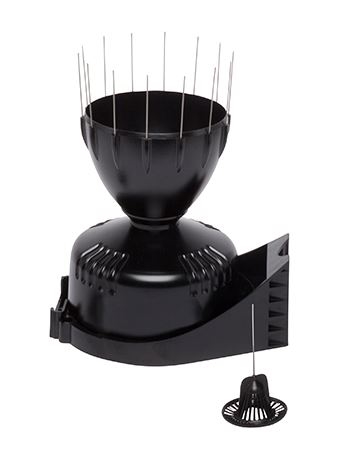
Rain gauge
Rain gauge maintenance involves keeping the gauge level and the collection funnel clean
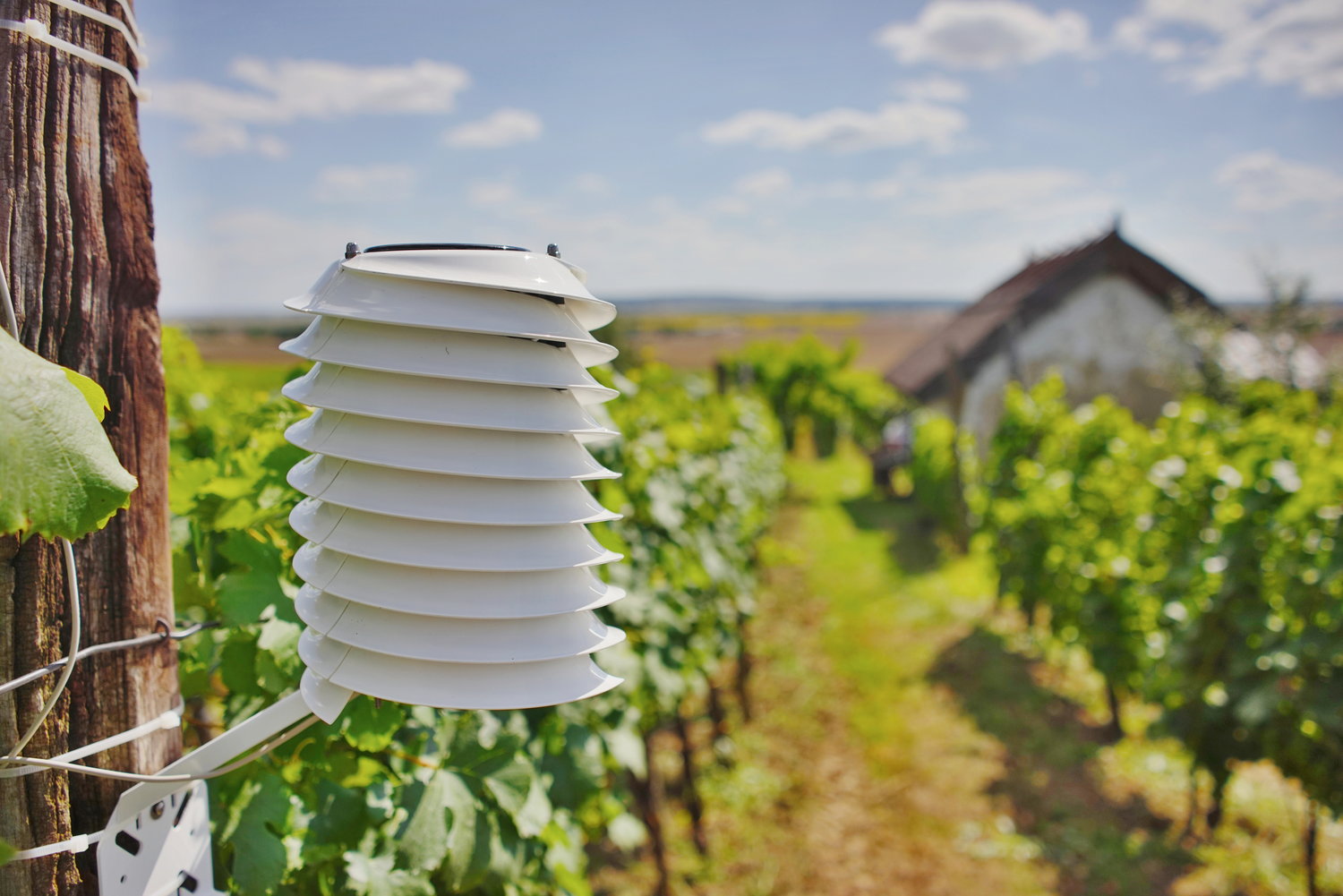
Actual maintenance of the temperature and humidity sensors should be left to skilled technicians. However, local personnel can extend the longevity of these sensors by regularly removing accumulated dirt and debris from the radiation shield. The radiation shield, sheds rainwater reasonably well but affords little protection against water arriving at an angle from ground level. Sprinklers should be adjusted to minimize direct water contact.
The presence of observation is the primary indicator of a functioning anemometer. Problems are most apparent when winds are light—usually in the morning.
Cups should be carefully cleaned using an index finger and a damp cloth, cleaning inside and around the cups.
The main problem causing poor anemometer performance is dirt in and around the sensor bearings. An anemometer that emits a grinding sound, does not rotate at low wind speeds, or halts abruptly with a lull in the wind likely has bad bearings. Faulty bearings will generate erroneously low wind speeds and should be replaced as soon as possible. Bearing replacement is best performed by a trained technician.
References
[1] http://agri.ckcest.cn/ass/NK006-20170522004.pdf
[2] https://www.onetemp.com.au/weather-station-kits
[3] https://www.wmo.int/pages/prog/www/IMOP/publications/IOM-104_TECO-2010/P1_1_Anderson_USA.pdf
[4] http://agroclimate.org/wp-content/uploads/2016/03/SE_Extension_FarmWeatherStation_Installation_and_Maintenance1124.pdf
[5] Wang L., Qu J., (2009), Satellite remote sensing applications for surface soil moisture monitoring: A review, Front, Earth Science, China, 3(2)Q 237-247
[6] https://www.inds.co.uk/product/soil-moisture-sensor/
[7] https://www.vegetronix.com/Products/VH400/
[8] https://www.hobodataloggers.com.au/low-cost-rain-gauge-pulse-output-02mm
[9] https://www.allmeteo.com/agriculture-iot-weather-station/>