
Data Logger [Professional]
Introduction
A data logger is an electronic device that records measurements at set intervals over a period of time. Data loggers are typically compact, battery-powered devices equipped with an internal microprocessor, data storage, and one or more sensors. They can be deployed indoors, outdoors, and underwater, and can record data for up to months at a time, unattended.
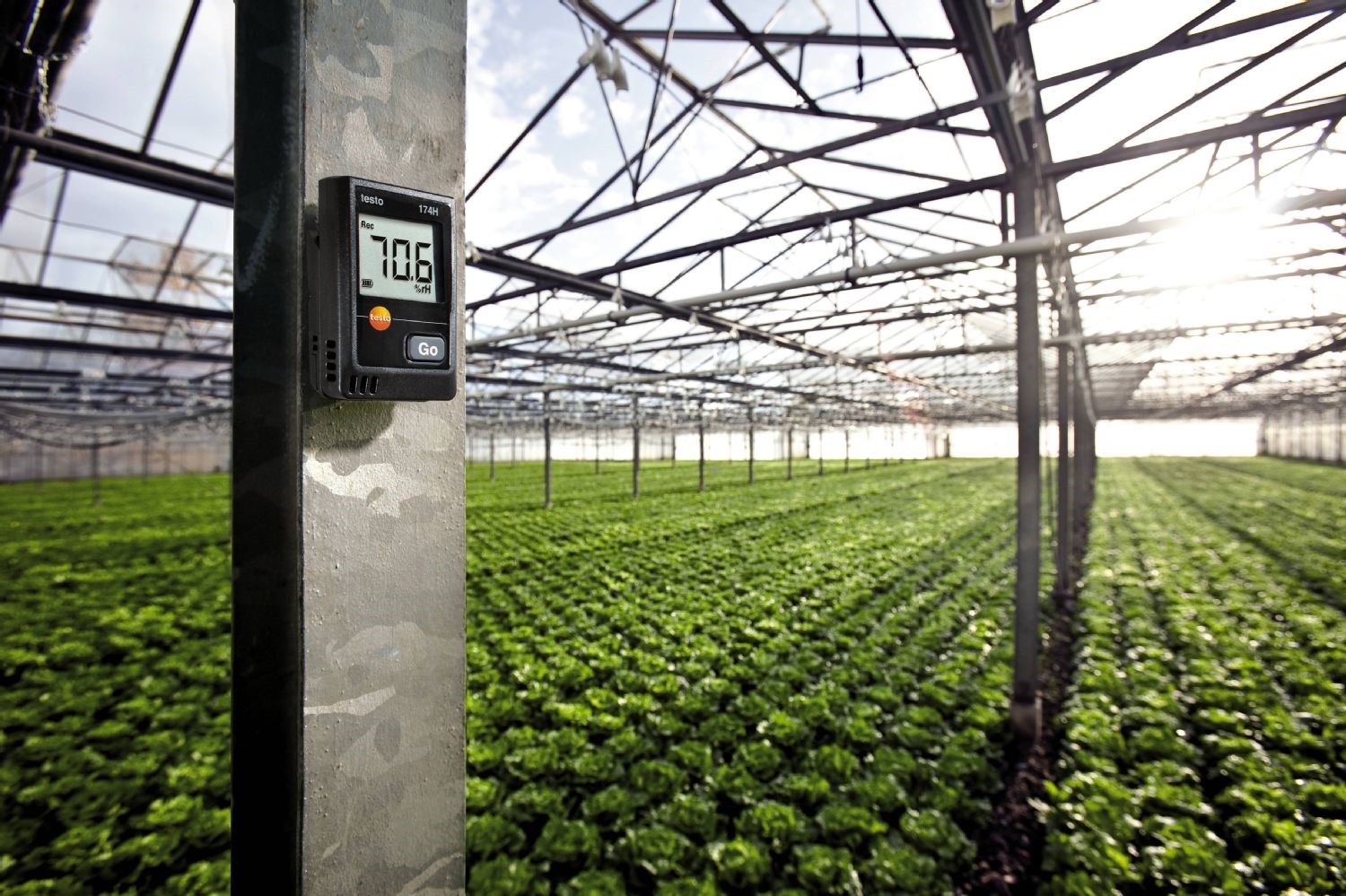
All data loggers share the same basic parts they diverge on how data can be downloaded. To this end, there are 3 main types of data loggers:[2]
Stand-alone USB data loggers: they are compact, reusable and portable and offer low cost and easy setup and deployment
Web-based data logging systems: enable remote, around-the-clock internet based access to data via GSM cellular, Wi-Fi or Ethernet communications
Bluetooth low energy data loggers: measure and transmit temperature and relative humidity data wirelessly to mobile devices over 100-foot range
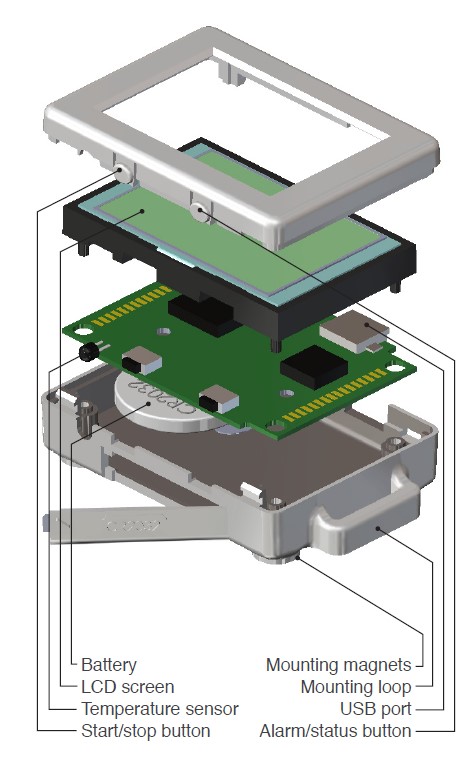
A data logger at its most basic, is a small device with internal microprocessor, data storage and one or more sensors, all housed in a hard plastic casing that is weatherproof and temper resistant, depending on the model. The sensor or sensors may be housed inside the data logger’s case or they may be attached to the logger’s sensor ports via a cable. They also have cable port or an optical sensor, through which data can be transmitted to the user. Finally some models have LCD screens that provide operating information, while others have simple light indicators.
Medium sized data loggers typically range from 213€ to 436€ per channel. Two to four channels is typical for the majority of portable equipment.[3]
Also data loggers can vary according to their sensors:
- Temperature data logger: they monitor temperature throughout a time period and can provide alerts in the event of extreme temperature conditions.
- Wireless data logger: they are ideal for real-time, continuous monitoring, wireless data loggers operate from any location to the web-based device.
- Humidity data loggers: they feature built-in sensors to measure environmental humidity levels and provide real-time alerts in the event of abnormalities.
- Pressure data logger: they can be used in a variety of settings to measure the pressure of gases or liquids. Depending on the environment, pressure data loggers are generally designed to withstand harsh and underwater conditions.
- Vibration/shock data logger: is a device that can measure and record shocks and vibrations over a period of time. Data is provided digitally, usually in the form of acceleration and time. The recordings are then able to be retrieved or transmitted for examination and evaluation.
- RTD data logger: the resistance temperature detector (RTD) is a sensor that provides an indication of temperature.[4]
Data loggers combine analog and digital measurements with programming methodology to sense temperature, relative humidity and other sensors. This data is then passed to the database and analysis software for storing and analysing the monitored data.[5]
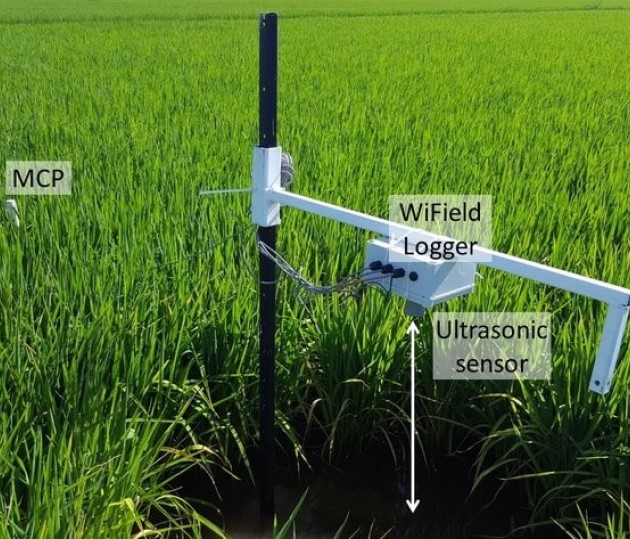
- They work 24 hours a day and 365 days of year while some logs data only during its predefined period.
- Once it is setup, it performs data logging automatically and does not require presence of human and can transmit all the data automatically to the computer.
- They are easy to use.
- They are low cost devices.
- It is accurate as likelihood of human errors is not there.
- It is easier to understand scientific experiments and scientific concept with the help of better graphs/plots.[7]
Because of the multiple uses that a data logger can have, the last decade they became really popular in the agriculture field.
They are valuable tools for anyone who wants to continuously monitor conditions without having to be on site.
They are extremely low-power devices, however because they operate in several environmental conditions their battery life can vary.
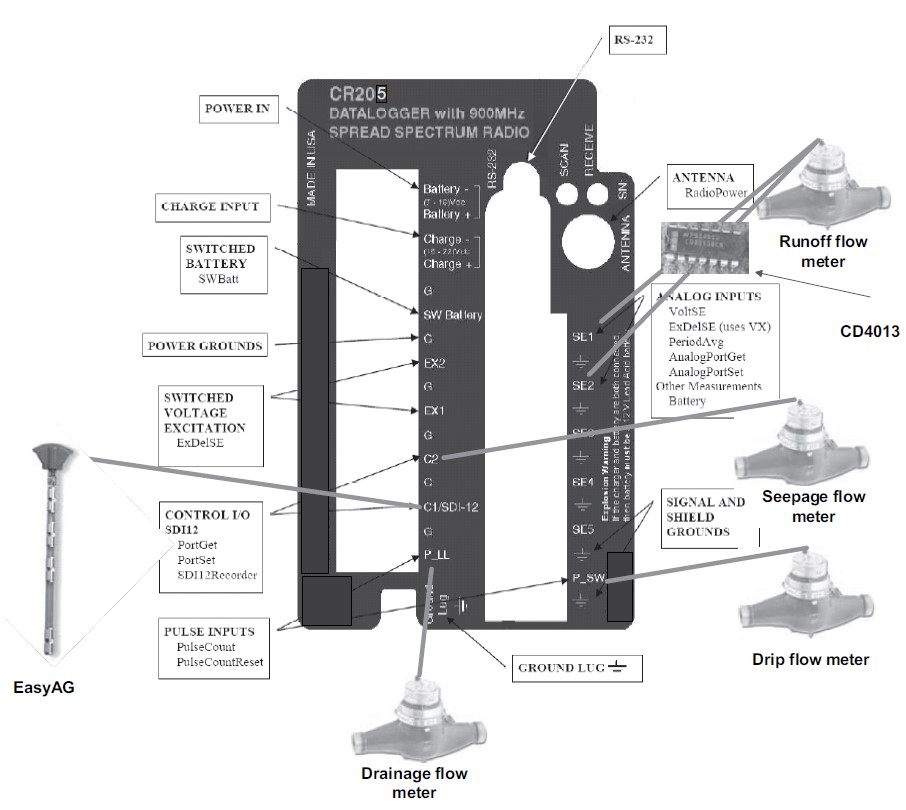
According to the results of the survey, daily irrigation can be better managed by using the real time data rather than analyzing the data after irrigation to fine-tune the next day’s irrigation. In addition the wireless system offered intangible benefits such as convenient data collection, timely troubleshooting, improved decision making for irrigation and drainage and less data loss than the manual system.[9]
Operate a data logger
In order to use the data logger 4 steps should be followed:
- Configure and launch: First connect the data logger to a computer via a USB interface.
- Secure in place: Deploy the data logger in the desired location.
- Download or access data: After the desired monitoring period, reconnect the data logger to the computer and launch the software to read out the data.
- Process/analyze/present data: The data logger’s software allows you to combine and compare data and display the measurements in graphs that show profiles over time.[2]
Typical user manual for data loggers can be found on the following website: http://www.bakrona-zuerich.ch/onsetcomp/onsetcomp_com/files/manual_pdfs/13416-C-MAN-U14-00x.pdf
More information about data loggers:
Data Logger manufacturers
ONSET: https://www.onsetcomp.com/
ADWIN: https://www.adwin.de/us/produkte/adlog.html
CAMPBELL SCIENTIFIC: http://www.campbellsci.ca
DELTA-T DEVICES: www.delta-t.co.uk
Reference
[1] testo.com/en-AE/products/datalogger-humidity
[2] onsetcomp.com/files/data-logger-basics.pdf
[4] spotsee.io/blog/types-of-data-loggers
[5] Sagarkumar S. et al., (2011), Data Logger System: A survey, International Journal of Computer Technology and Electronics pages 24-26 published on the National Conference on Emerging Trends in Computer Science and Information Technology
[6] Brinkhoff, James & Hornbuckle, John & Dowling, Thomas. (2017). Multisensor Capacitance Probes for Simultaneously Monitoring Rice Field Soil-Water- Crop-Ambient Conditions. Sensors. 18. 53. 10.3390/s18010053
[7] rfwireless-world.com/Terminology/Advantages-and-Disadvantages-of-Data-Loggers.html
[8] Campbell Scientific, Inc., Logan, Utah); RS-232 = data port using recommended standard 232; SDI12 = serial digital interface at 1200-baud; CD4013 = dual D-type flip-flop integrated circuit chip; EasyAG = EasyAG soil moisture probe (Sentek Pty Ltd, Stepney, Australia)
[9] Shuka S., Yu Y. C., Hardin J. D. and Jaber F.H., (2006), Wireless Data Acquisition and Control Systems for Agricultural Water Management Projects, HorlTechnology 16(4) pages 595-604