
Variable Rate Spraying [Student]
Introduction
Variable rate technology (VRT ) is used for the application of various agricultural inputs in order to respond adequately to the within-field variability of environmental factors like soil properties, incidence of pests and crop parameters[1].
In agricultural crop production, indiscriminate application of herbicides leads to environmental pollution and reduced quality of the agricultural products. Variable-rate herbicide spraying (VRHS) technology can provide a solution to this problem as it can precisely adjust the application rates. It can lead towards minimal farmland pollution, safety of agricultural products and personnel, and sustainable development of agriculture. VRHS systems can either use real-time machine vision to generate the weed map or use predetermined prescription maps. The VRHS system based on prescription chart usually uses sensing in conjunction with Global Positioning System (GPS) and Geographic Information System (GIS) technology for the generation of prescription chart.[2]
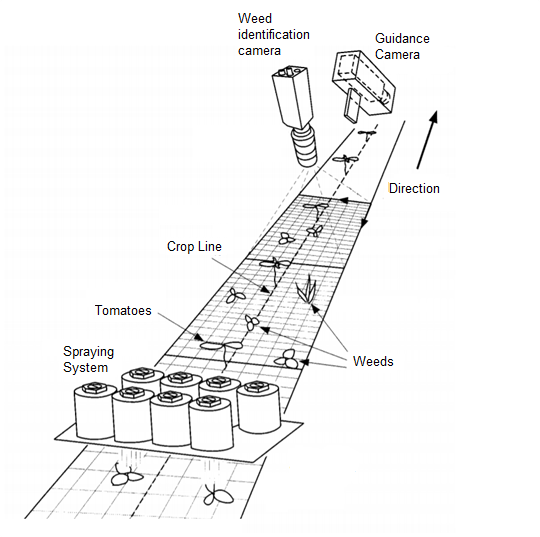
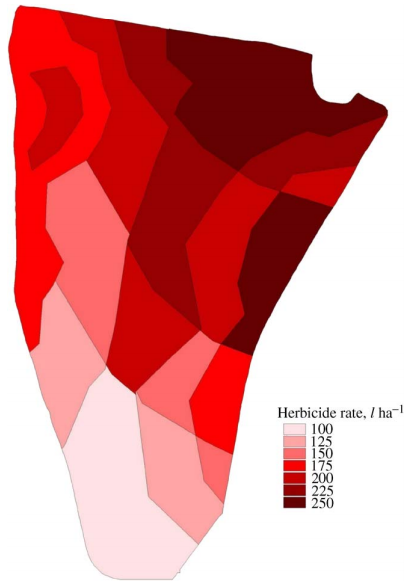
Related Smart Farming Technology Products
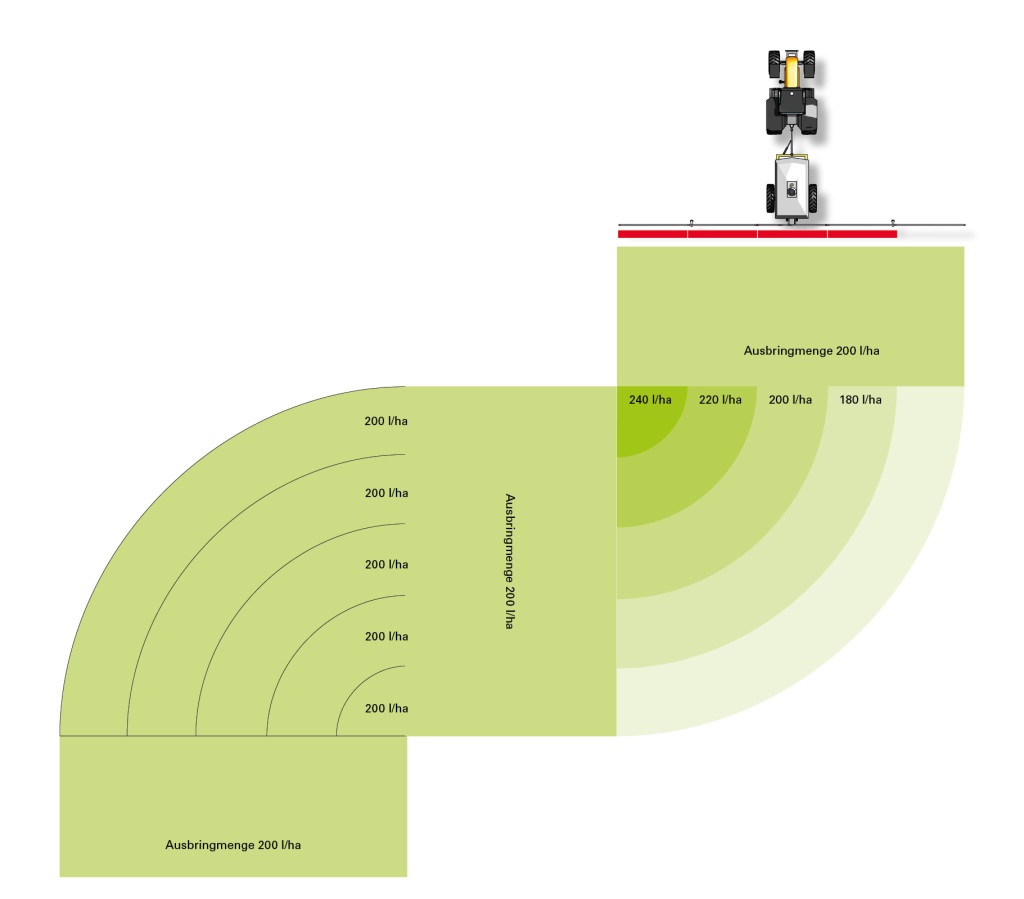
CURVE-Control[4]
When using prescription maps in precision farming, the target rate can be regulated accordingly for each section. When maneuvering curves with the sprayer, CURVE-Control ensures a constant application rate both in the outer and inner areas. This is made possible by switching different nozzle combinations on each section.
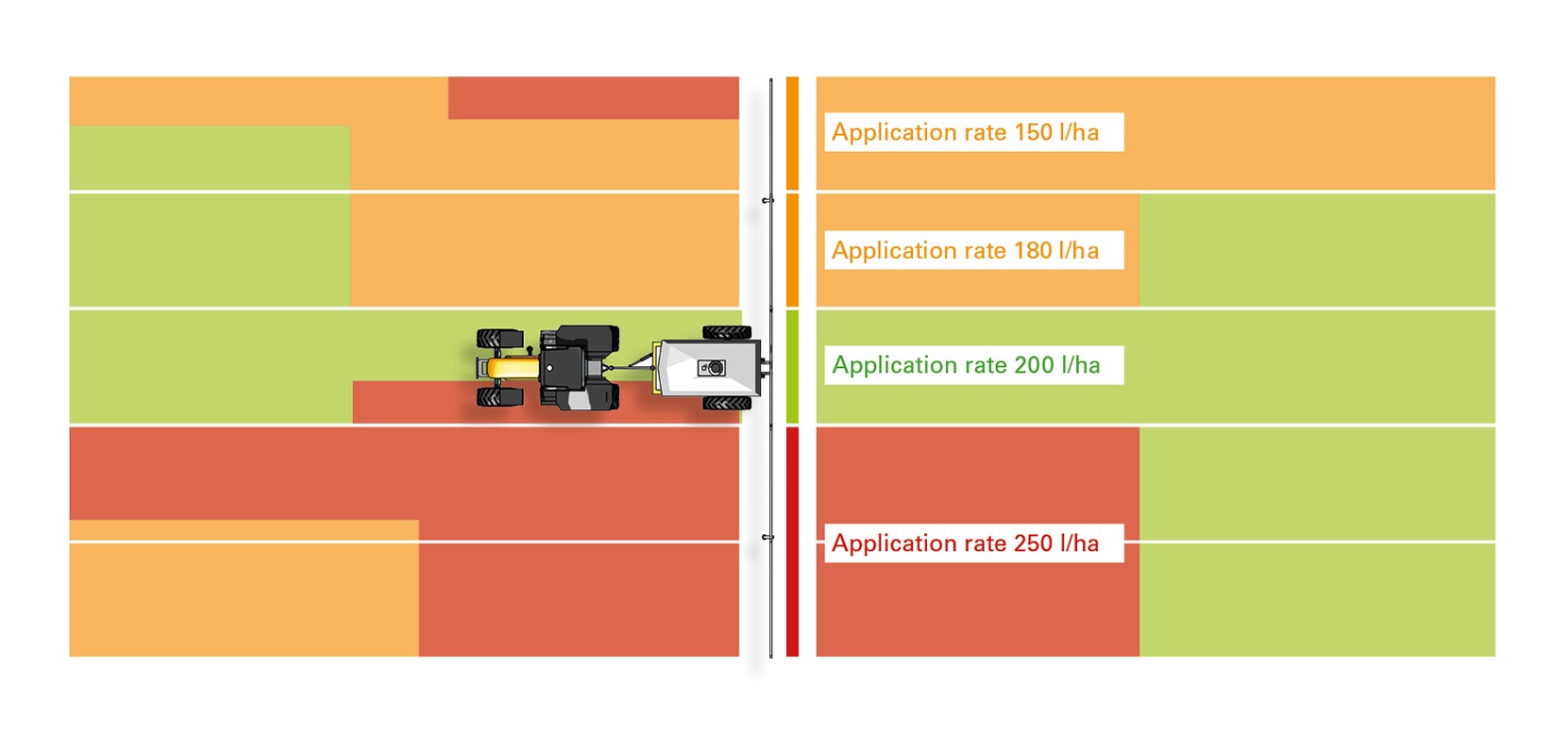
The benefits of MULTI-Control for agricultural practice can be clearly illustrated using the example of a sprayer. MULTI-Rate makes it possible to transmit multiple target rates simultaneously using the Task-Controller. When using prescription maps in precision farming, the target rate can be regulated accordingly for each section. Until now, it was only possible over the entire boom
width of the sprayer.
Related Scientific Papers
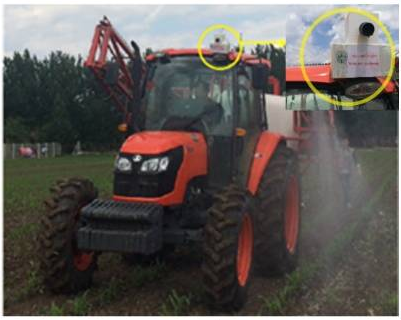
A Real-Time Weed Mapping and Precision Herbicide Spraying System for Row Crops[2]
This study developed and field tested an automated weed mapping and variable-rate herbicide spraying (VRHS) system for row crops. Weed detection was performed through a machine vision sub-system that used a custom threshold segmentation method, an improved particle swarm optimum (IPSO) algorithm, capable of segmenting the field images.
Variable Rate Herbicide Application Using GPS and Generating a Digital Management Map[6]
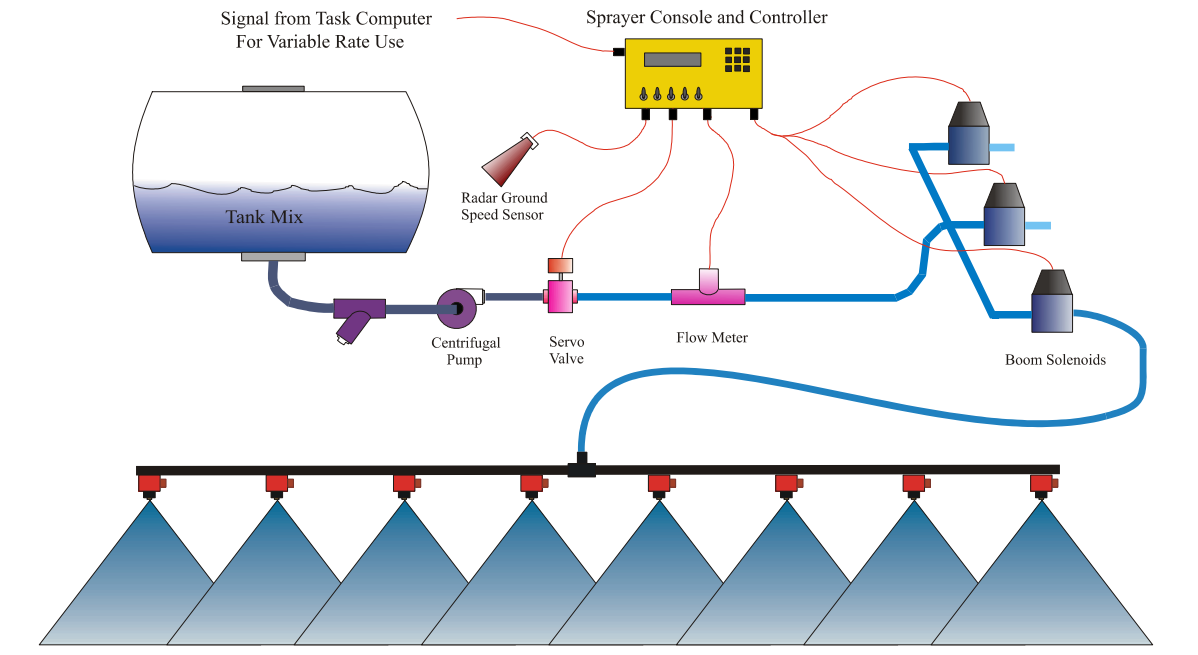
For this purpose a digital management map is generated using the global positioning system (GPS). This system is based on GPS data for positioning of sprayer, comparing the GPS data with digital management map data, measuring of speed, and finally injection of active ingredient inside carrier fluid using solenoid injectors proportionate to any management zone on the digital management map.
References
[1] Markus Sökefeld (2010) Variable Rate Technology for Herbicide Application. Precision Crop Protection – the Challenge and Use of Heterogeneity pp 335-347
[2] Yanlei Xu, Zongmei Gao, Lav Khot, Xiaotian Meng, and Qin Zhang (2018) A Real-Time Weed Mapping and Precision Herbicide Spraying System for Row Crops. A Real-Time Weed Mapping and Precision Herbicide Spraying System for Row Crops
[3] W. S. Lee, David Slaughter and D. K. Giles (1999) Robotic Weed Control System for Tomatos. Precision Agriculture 1(1):95-113
[4] Curve-control
[5] Michele Carrara, Antonio Comparetti, Pierluigi Febo, Santo Orlando (2004) Spatially Variable Rate Herbicide Application on Durum Wheat in Sicily. Biosystems Engineering 87(4):387-392
[6] Majid Rashidi and Davood Mohammadzamani (2011) Variable Rate Herbicide Application Using GPS and Generating a Digital Management Map. Herbicides, Theory and Applications.