
Dicotyledon Weed Quantification Algorithm for Selective Herbicide Application in Maize Crops [Farmer]
Paper Introduction
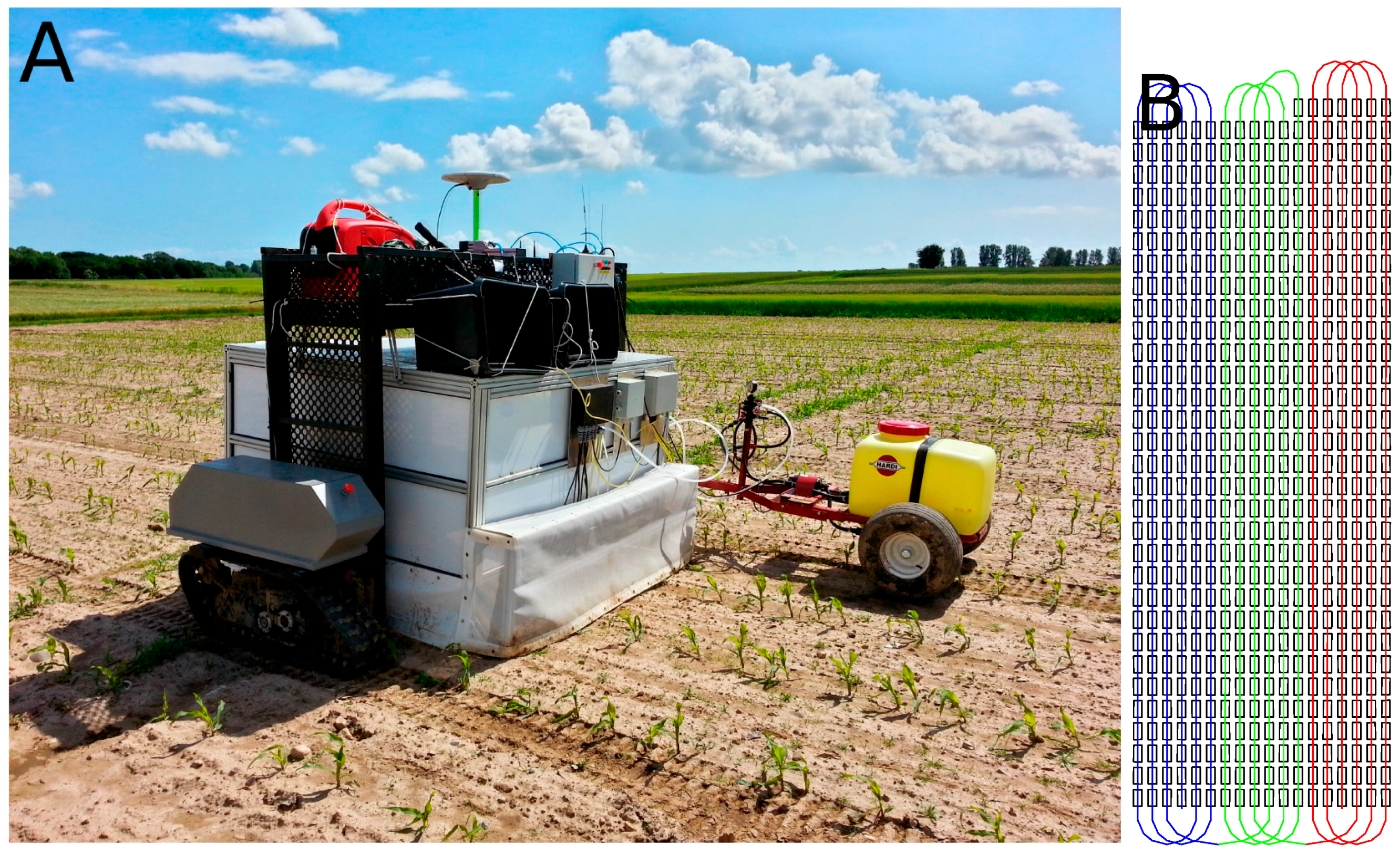
High-resolution images from digital cameras support the studying of plant characteristics. These images can also be utilized to analyze shape and texture characteristics for weed identification. Instead of detecting weed patches, weed density can be estimated at a sub-patch level, through which even the identification of a single plant is possible. The aim of this study is to adapt the monocot and dicot coverage ratio vision (MoDiCoVi) algorithm to estimate dicotyledon leaf cover, perform grid spraying in real time, and present initial results in terms of potential herbicide savings in maize. [1]
References
[1] M. S. Laursen et al. (2016). Dicotyledon Weed Quantification Algorithm for Selective Herbicide Application in Maize Crops. Sensors 2016, 16(11), 1848; https://doi.org/10.3390/s16111848.