
Dicotyledon Weed Quantification Algorithm for Selective Herbicide Application in Maize Crops [Student]
Paper Introduction
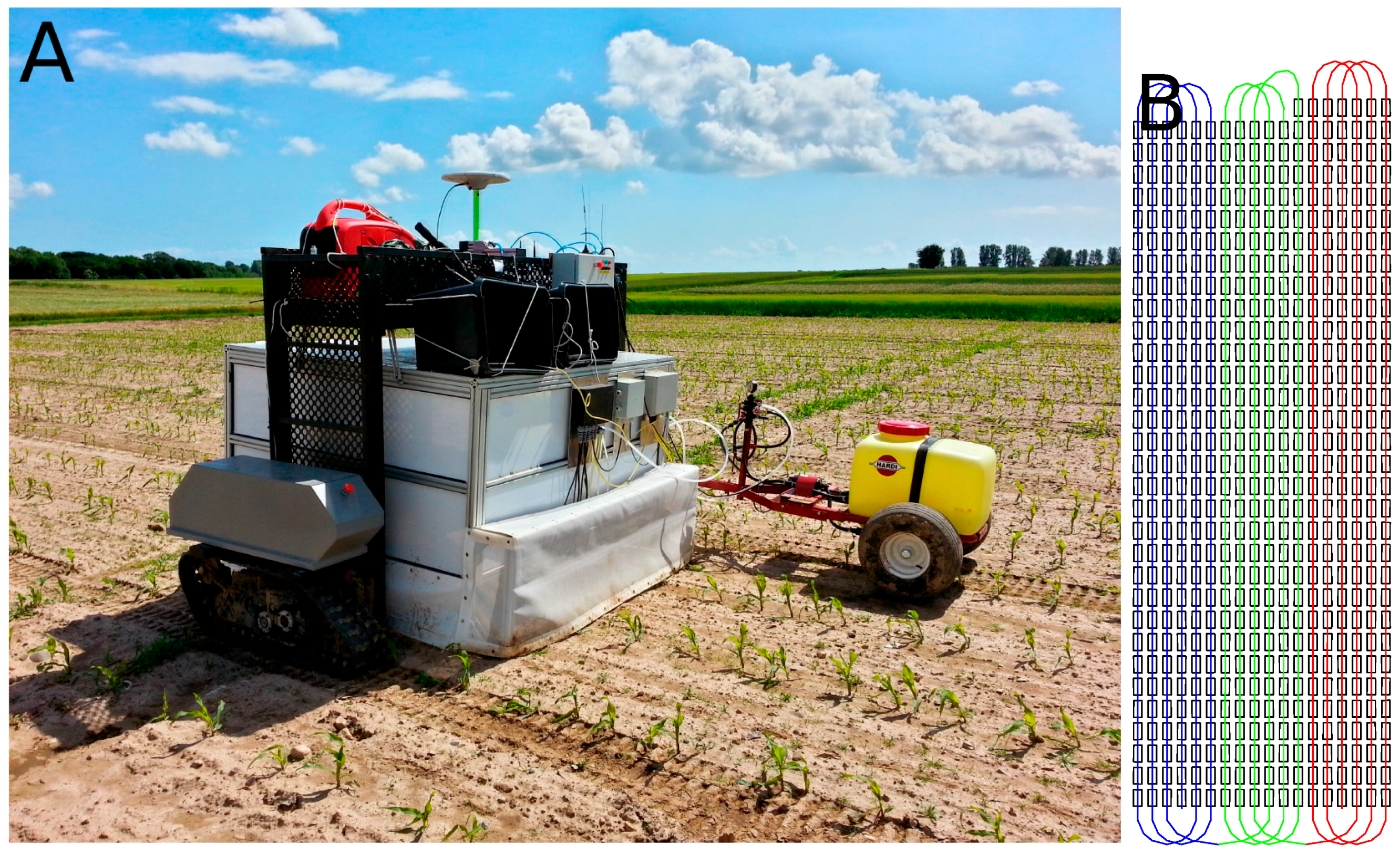
Weed density can be estimated at a sub-patch level, through which even the identification of a single plant is possible. The aim is to adopt the monocot and dicot coverage ratio vision (MoDiCoVi) algorithm in order to estimate dicotyledon leaf cover, perform grid spraying in real time, and present initial results in terms of potential herbicide savings in maize. The authors designed and executed an automated, large-scale field trial supported by the Armadillo autonomous tool carrier robot. The field trial consisted of 299 maize plots. Half of the plots (parcels) were planned with additional seeded weeds; the other half were planned with naturally occurring weeds. The in-situ evaluation showed that, compared to conventional broadcast spraying, the proposed method can reduce herbicide usage by 65% without measurable loss in biological effect. [1]
References
[1] M. S. Laursen et al. (2016). Dicotyledon Weed Quantification Algorithm for Selective Herbicide Application in Maize Crops. Sensors 2016, 16(11), 1848; https://doi.org/10.3390/s16111848.