ISOBUS Protocol [Professionals]
Introduction
ISO 11783 (commonly referred to as “ISO Bus” or “ISOBUS”) is an electronic protocol for the communication of agricultural components and tractors (also forestry equipment) based on the SAE J1939 protocol (which includes CANbus).
It all started years ago when the first electronic systems began to be created in agriculture, each manufacturer created and developed electronic systems in its own protocols, which in the present days cannot communicate and transfer elements among themselves. For example, it is almost unlikely to find a farmer with a sprayer with the same protocol as the fertilizer distributor. This results in a significant problem when we want to track our crop electronically and apply Precision Agriculture techniques.
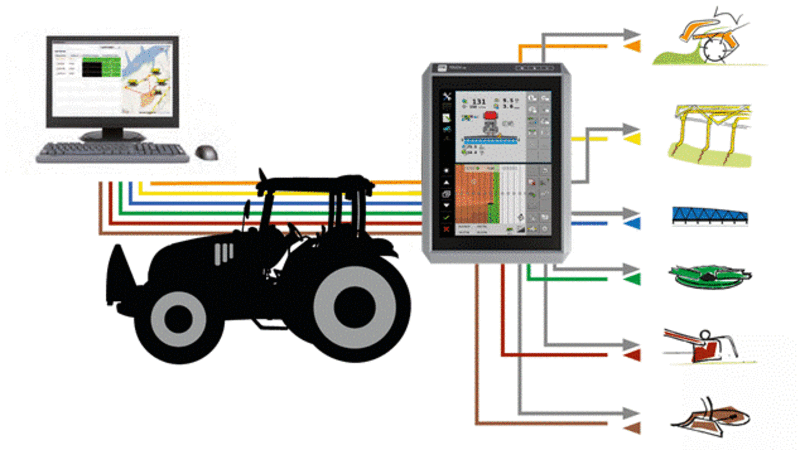
“ISOBUS” was created through a partnership of tractors, accessories and electronic systems. It is now a basic rule in buying implements with electronic components to specify if they are “ISOBUS-ready”. Otherwise, you need to spend enough money on converters from one protocol to another. Example: If you purchase a non-ISOBUS GPS navigation system but this is associated with the spraying device, when you buy a Fertilizer spreader with electronic systems, it will be impossible to connect. In this case you either have to buy a second GPS navigator or you will pay 1/3 of the GPS value for conversion.[1]
Related Smart Farming Technologies
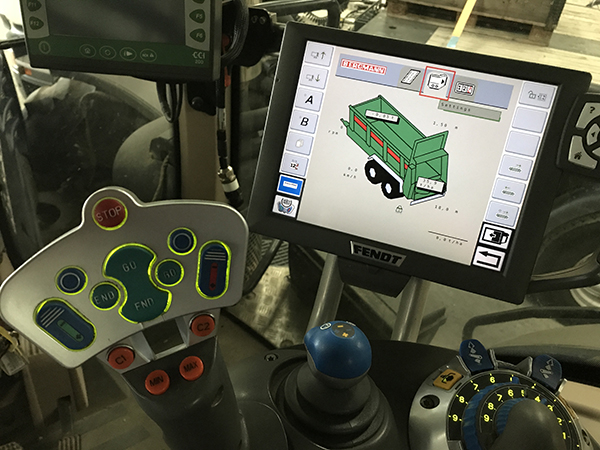 | 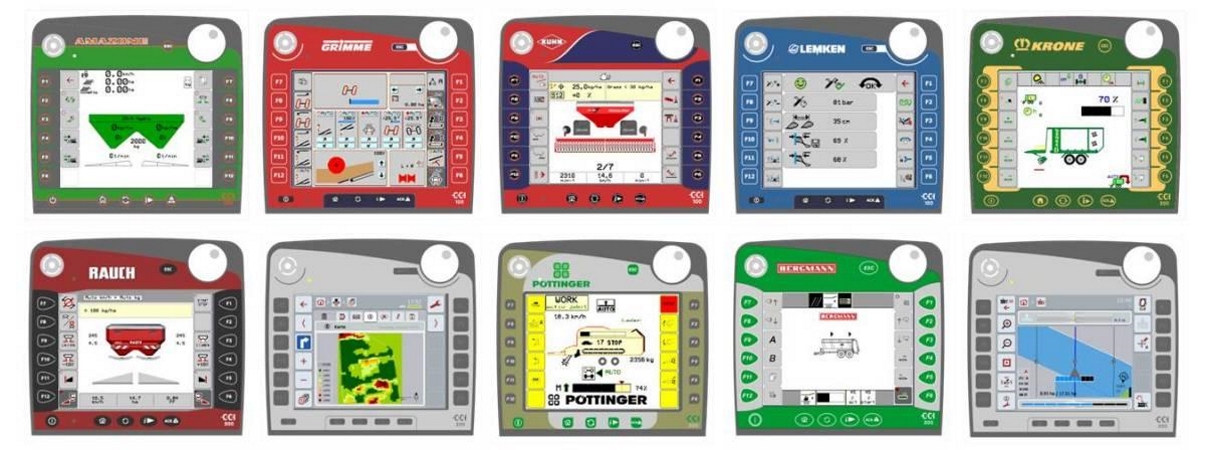 |
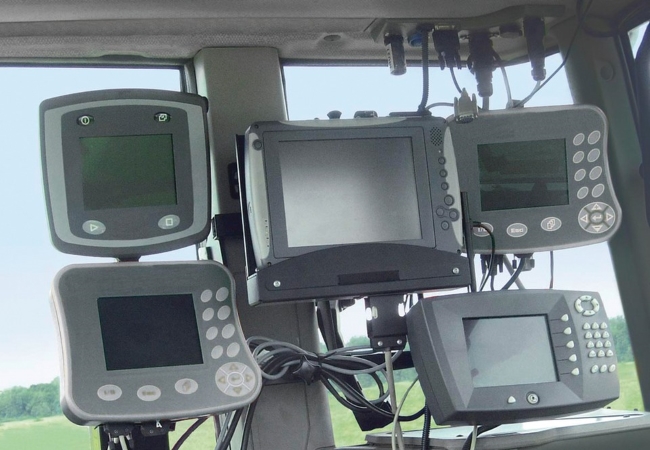
Figure 3: A fully integrated ISOBUS system.[4] | Figure 4: Multiple manufacturers terminals.[4] |
ISO 11783 Parts:[5]
Virtual Terminal
The Virtual Terminal (VT) is used to provide the user interface. A virtual terminal has a graphic display, softkeys and some means to enter data. The standard specifies only aspects that are necessary for interoperability and leaves the implementation details to the terminal manufacturers.
After loading its interface, the controller can use the terminal to show information. Also, every time a softkey is pressed or data is entered, the terminal notifies the controller by sending messages.
FENDT ISOBUS Terminal:
Tractor Control Unit
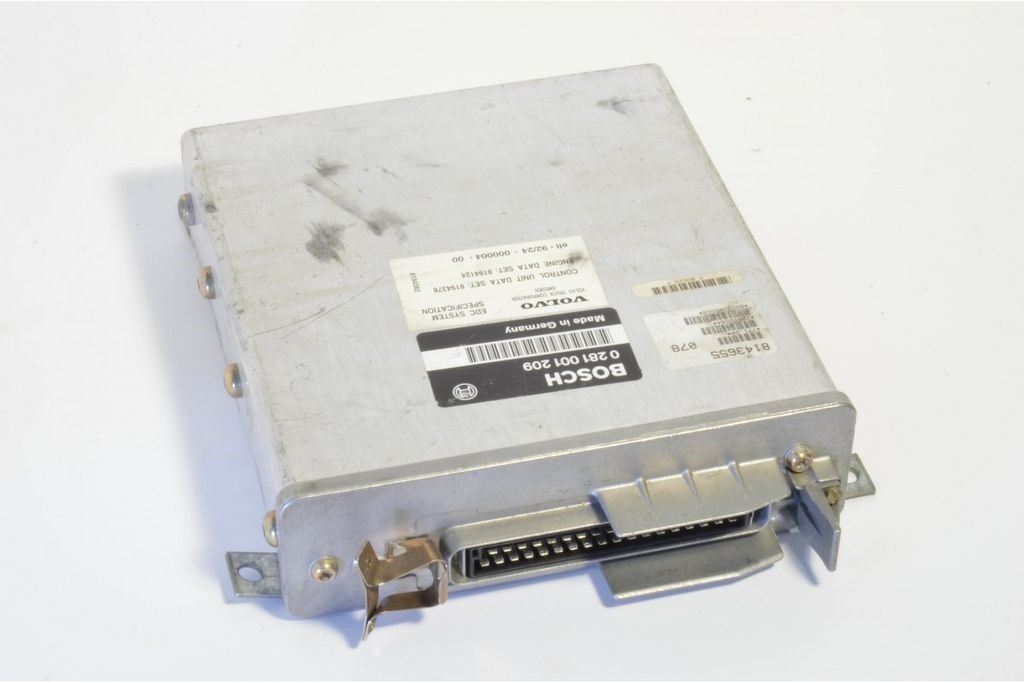
The Tractor Electronic Control Unit (Tractor ECU) is responsible for transmitting the basic information of tractor’s state to the ISO 11783 network. The ISO 11783 specifies three tractor classes.
Class 1 includes only basic measurements, and it is not recommended to new tractors.
Class 2 contains advanced measurements, for example the horizontal force of rear hitch and hydraulic valve flow measurement.
Class 3 supports control functions by which implement can control tractor resources, implement can control 3-point hitch, power-take-off and hydraulic outputs.
Implement Control Unit
All the controllers on a single implement form a working set. In a working set, one controller assumes the role of the working set master. The working set master is responsible for transmitting the user interface to the Virtual Terminal. The objects, which make up the user interface, are called collectively as the object pool.
The object pool is a hierarchical structure where all the objects are identified by unique object IDs. Data and alarm masks are top-level objects that can contain graphical objects and container objects. Only one data or alarm mask can be shown at a time as they fill the entire data mask area. Data masks are used to display information during normal operating conditions. Alarm masks are used to show warnings or error messages.
Typical ISOBUS Implement Control system:
Task Controller
These days management of the farm activities carried out in the fields is essential for farmers and contractors. The planned tasks are sent to the Task Controller which is used in the Mobile Implement Control System for the execution of tasks and the results of the work tasks are sent back to Farm Management Information System (FMIS), stationary farm computer of the farmer or contractor.
Positioning Information
The GPS receiver provides the positioning information to the ISO 11783 network. Navigation messages in NMEA 2000 standard are utilized in ISO 11783. (NMEA, 2000)
Farmers Economical Standpoint
EcoTom Murphy, a tillage farmer from Co. Kilkenny, recently invested in both an ISOBUS-equipped John Deere tractor and an ISOBUS-compatible Amazone fertiliser spreader.
Murphy bought a John Deere 6930 with an upgraded SF1 ISOBUS package. The total package (excluding the tractor itself, of course) cost between €9,000 and €10,000. It includes the latest, improved Autotrac features and the 2630 in-cab screen (which is tied into the GreenStar satellite-based system).
The spreader is an Amazone ZA-V mounted unit. The added ISOBUS and controller technology cost in the region of €15,000 extra. However, Murphy feels these extras were definitely worth the spend.
“There is about 5% of a saving on fertiliser costs when using a spreader with this technology”.[7]
Message Structure
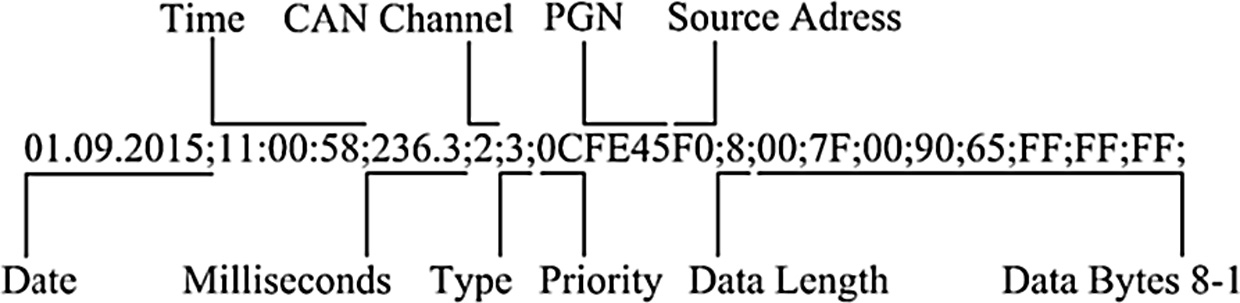
The messages sent through the ECU and implements have a structure that consists of: Start of Frame(SOF), ID ADDRESS(PGN & SPN etc for priority transmission), Remote Transmit Request(RTR), Identifier Extention(IDE), Data Length(DLC), Data Field, Cyclic Redundant Check(CRC), CRC Delimeter, Acknowledge (ACK), ACK Delimeter, End of Frame (EOF).
References
[1] http://tractorgps.gr/ekpaideutiki_basi/
[2] https://www.lid.ch/medien/dossier/aktuelles-dossier/info/artikel/bits-und-bytes-sorgen-fuer-aufbruch/
[3] https://www.oemoffhighway.com/electronics/article/10856427/aef-standard-electronics-connectors-terminals
[4] http://www.continentalsoiltechnology.com/bergmann-spreaders-isobus/
[5] Oksanen, T., Öhman, M., Miettinen, M., & Visala, A. (2005). ISO 11783–STANDARD AND ITS IMPLEMENTATION.
[6] https://autoline.info/-/sale/control-units/tractor-unit/BOSCH-ECU–18080615295148950700
[7] https://www.agriland.ie/farming-news/video-can-isobus-save-you-money-in-the-long-run/
[8] Kortenbruck, D., Griepentrog, H. W., & Paraforos, D. S. (2017). Machine operation profiles generated from ISO 11783 communication data. Computers and Electronics in Agriculture, 140, 227-236.