
Variable Rate Manure and Slurry Application [Professional]
Introduction
In intensive agricultural livestock production manure prevails regularly as a waste problem rather than an organic fertilizer and valuable source of nutrients. The advantages of a fully developed variable rate slurry spreader technology cannot be overemphasized.[1] Such systems can give much more accurate results with as-applied verification, while reducing commercial fertilizer inputs and providing a higher level of accountability in implementing state- and federally-mandated nutrient management plans. Having the ability to incorporate field-specific mapping through GPS/GIS will enable valuable integration of the manure nutrient management plan into the rest of the farm’s agronomic operations. Integrated GPS coupled mapping will also provide automatic shutting off of application equipment within setback areas (near streams, wells, tile inlets, and other sensitive areas).[2]
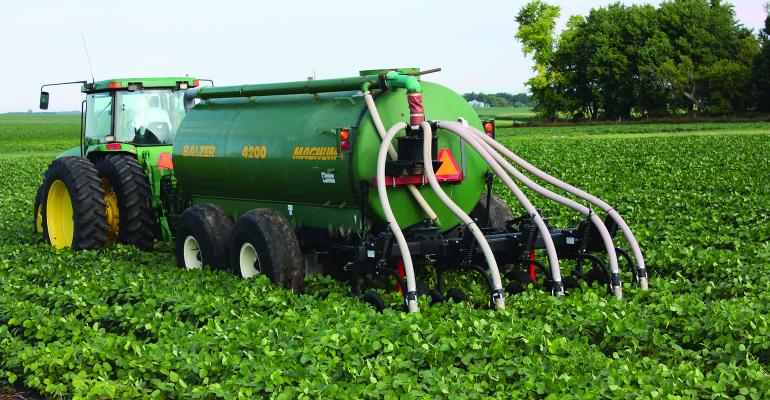
Variable-rate application of manure would help reduce environmental consequences by applying manure only where nutrients are needed. Several authors have emphasized the potential of VR fertilization to improve water quality by reducing fertilization where nutrients are above levels required for optimum crop production. Furthermore, is has been demonstrated that manure application equipment can be easily modified to apply VR manure.[3]
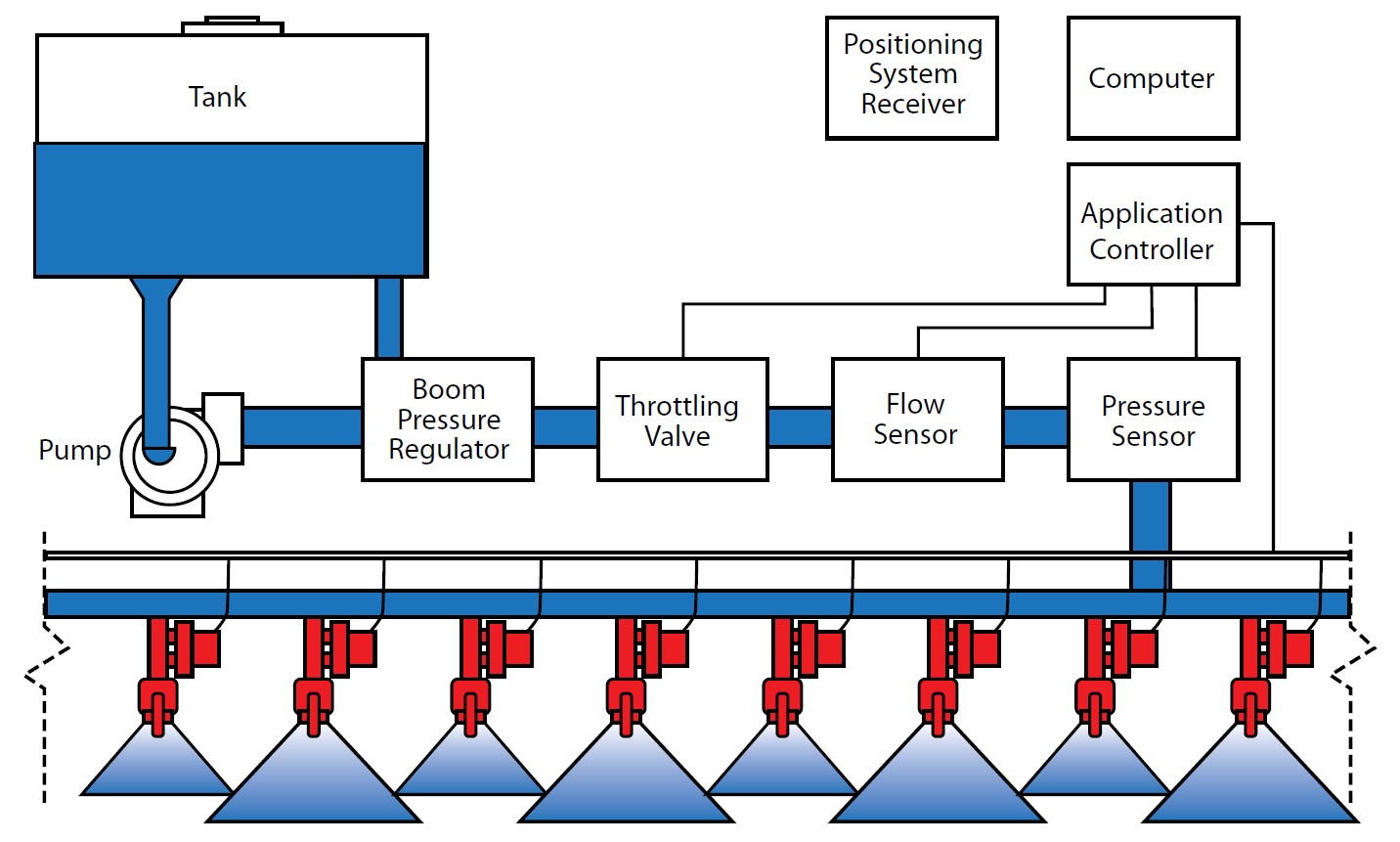
Related Smart Farming Technology Products
JOHN DEREE MANURE SENSOR (HARVESTLAB 3000)[5]
Manure is a nutrient-rich organic fertiliser. But until now, natural variance and rapid settling left the success of manure fertilisation to chance. With John Deere Manure Sensing, you have the unique advantage of being able to apply nitrogen (N), phosphorus (P) and potassium (K) precisely based on a nutrient target and limit rate in kg/ha and even utilize site-specific prescription maps.
John Deere Manure Sensing can analyse constituents not only during filling but also during application the second before the nutrients hit the soil. An invaluable advantage over other systems, as natural nutrient variances and settling during transport are taken into account and compensated with automatic real-time speed and/or flow rate adjustments.
John Deere Manure Sensing: | John Deere Manure Sensing Animation: |
References:
[1] Haneklaus, S., Schick, J., Kratz, S., Rückamp, D., & Schnug, E. (2016). Variable rate application of manure–gain or pain?. Landbauforschung—Appl Agri Forstry Res, 66(1), 1-9
[2] Funk, T. L., & Robert, M. J. (2003, December). Variable rate manure spreader: technology to validate a nutrient management plan. In Proc. Illinois Pork Industry Conference
[3] Wittry, D. J., & Mallarino, A. P. (2002, July). Use of variable-rate technology for agronomic and environmental phosphorus-based liquid swine manure management. In Sixth International Conference on Site-Specific Management for Agricultural Systems Proceedings, American Society of Agronomy
[4] Grisso, R. D., Alley, M. M., Thomason, W. E., Holshouser, D. L., & Roberson, G. T. (2011). Precision farming tools: variable-rate application.
[5] John Deere HarvestLab 3000
Feature Image Source: https://www.nationalhogfarmer.com/manure/dealing-uncertainty-manure