Sensors

Data collection is the process of collecting and storing high amounts of data from any system. The data results from the calculations by sensors, machines and experiments. They can be weather data, environmental parameters, images etc.

Soil Electrical Conductivity Sensors [Professional]

Introduction Accurate soil water content measurements are critical for estimation of energy and water balances, as well as for understanding chemical and biological processes in vadose zone, plant root zones and in groundwater.[1] Soil electrical conductivity is an indirect measurement that correlates very well with several soil physical and chemical properties. Electrical conductivity is the… read more »
Canory Reflectance Sensors [Student]

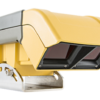
Introduction Remote Sensing is the ability to measure the properties of an object or region without the need of physical contact with the object itself (Lillesand and Keifer, 1994). In most remote sensing applications, electromagnetic radiation (EMR) is used to ‘sense’ a certain attribute of the object or area of interest.[1] By combining more than… read more »

Canory Reflectance Sensors [Farmer]

Introduction Remote Sensing is the ability to measure the properties of an object or region without the need of physical contact with the object itself (Lillesand and Keifer, 1994). In most remote sensing applications, electromagnetic radiation (EMR) is used to ‘sense’ a certain attribute of the object or area of interest.[1] By combining more than… read more »

Canory Reflectance Sensors [Professional]

Introduction Remote Sensing is the ability to measure the properties of an object or region without the need of physical contact with the object itself (Lillesand and Keifer, 1994). In most remote sensing applications, electromagnetic radiation (EMR) is used to ‘sense’ a certain attribute of the object or area of interest.[1] By combining more than… read more »

Drones with mounted Sensors [Student]

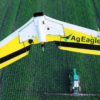
Introduction An unmanned aerial vehicle (UAV), commonly known as a “drone” is an aircraft without a human pilot aboard. The flight of UAVs may be controlled either autonomously by on-board computers or remote control pilot on the ground from distance. Agriculture is one of the main sectors that drones have find numerous uses and have… read more »

Variable Rate Sprayers [Student]

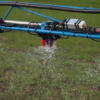
Introduction To achieve a more precise, ecological and economical pesticide application process, it is important to focus on crop parameters and field variability instead solely on disease occurrence. In fields with different soil quality, crops and water availability the amount of spray needed varies as well. For example, areas with a reduced cop growth need… read more »

Variable Rate Sprayers [Professional]

Introduction To achieve a more precise, ecological and economical pesticide application process, it is important to focus on crop parameters and field variability instead solely on disease occurrence. In fields with different soil quality, crops and water availability the amount of spray needed varies as well. For example, areas with a reduced cop growth need… read more »

Real time weed detection [Professional]

Introduction Weed control is a key element in precision agriculture. In computer vision, variety of techniques are developed to detect, identify and locate weeds in different crops. Chemical weed control is widely practiced to reduce infection rates and improve crops. Targeting weeds and minimizing the exposure of the crops to sprayed agrochemicals results in high… read more »

EM 38 MK2 Soil Conductivity Sensor [Farmer]

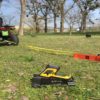
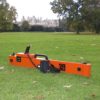
Introduction The EM38-MK2 sensor provides measurement of the ability of the soil to conduct electricity within two distinct depth ranges, without any requirement for soil-to-instrument contact. With a maximum effective depth of exploration of 1.5 m, applications in agriculture are perfect. An optional, collapsible calibration stand supports automation of the instrument calibration procedure. Once positioned… read more »

EM 38 MK2 Soil Conductivity Sensor [Student]

Introduction The EM38-MK2 provides measurement of both the quad-phase (conductivity) and in-phase (magnetic susceptibility) components within two distinct depth ranges, all simultaneously, without any requirement for soil-to-instrument contact. With a maximum effective depth of exploration of 1.5 m, applications in agriculture, archaeology and general soil sciences are common. The standard EM38-MK2 includes two receiver coils,… read more »

Sidebar