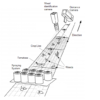

Sensors

Data collection is the process of collecting and storing high amounts of data from any system. The data results from the calculations by sensors, machines and experiments. They can be weather data, environmental parameters, images etc.

EM 38 MK2 Soil Conductivity Sensor [Professional]

Introduction The EM38-MK2 provides measurement of both the quad-phase (conductivity) and in-phase (magnetic susceptibility) components within two distinct depth ranges, all simultaneously, without any requirement for soil-to-instrument contact. With a maximum effective depth of exploration of 1.5 m, applications in agriculture, archaeology and general soil sciences are common. The standard EM38-MK2 includes two receiver coils,… read more »
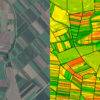
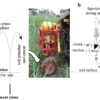
Multi-temporal mapping of the vegetation fraction in early-season wheat fields using images from UAV [Farmer]

Paper Introduction Mapping vegetation in crop fields is an important step in remote sensing applications for precision agriculture. Traditional aerial platforms such as planes and satellites are not suitable for these applications due to their low spatial and temporal resolutions. So, an UAV equipped with a commercial camera (visible spectrum) was used for ultra-high resolution… read more »

Multi-temporal mapping of the vegetation fraction in early-season wheat fields using images from UAV [Professional]

Paper Introduction Mapping vegetation in crop fields is an important step in remote sensing applications for precision agriculture. Traditional aerial platforms such as planes and satellites are not suitable for these applications due to their low spatial and temporal resolutions. So, an UAV equipped with a commercial camera (visible spectrum) was used for ultra-high resolution… read more »

Nitrogen Fertilization – Best Practices and Advancements [Professional]

  Introduction Nitrogen (N) is one of the most important mineral nutrients for plant growth, yield and crop quality. Precise timing and rate of N fertilizer application play a major role in plant nutrition. Prediction of N requirements is necessary for efficient utilization of nitrogen fertilizers. Improving the efficiency of N fertilizer utilization reduces the… read more »

Variable Rate Spraying [Farmer]

  Introduction Variable rate technology (VRT ) is used for the application of various agricultural inputs in order to respond adequately to the within-field variability of environmental factors like soil properties, incidence of pests and crop parameters[1]. In agricultural crop production, indiscriminate application of herbicides leads to environmental pollution and reduced quality of the agricultural… read more »

Variable Rate Spraying [Student]

  Introduction Variable rate technology (VRT ) is used for the application of various agricultural inputs in order to respond adequately to the within-field variability of environmental factors like soil properties, incidence of pests and crop parameters[1]. In agricultural crop production, indiscriminate application of herbicides leads to environmental pollution and reduced quality of the agricultural… read more »

Sidebar